Man Talk may earn a commission when you buy through links on this page. That never changes what gets recommended, and it never changes the price you pay.
Best Retro Gaming Handhelds Under $100
The best retro gaming handheld under $100 in 2026 is the Miyoo Mini Plus (around $65) for pocket-sized play. The Anbernic RG35XX SP (around $75) is the top pick for a screen-protecting clamshell. The TrimUI Brick (around $80) adds the sharpest display in the class. Every device in this guide runs Game Boy, SNES, Genesis, and PS1 games without problems. The differences show up in N64, Dreamcast, and PSP performance, in build quality, and in how good the community firmware is. That firmware point trips up most first-time buyers, because the software a device ships with is rarely the software worth using. This guide compares nine devices on all of those points. The comparisons rest on published specs and the collective testing of the retro handheld community, not marketing copy. It also covers what these machines genuinely cannot do. By the end you will know which device fits your pocket, your game library, and your budget. You will also know which accessories are worth adding and which devices to skip entirely.
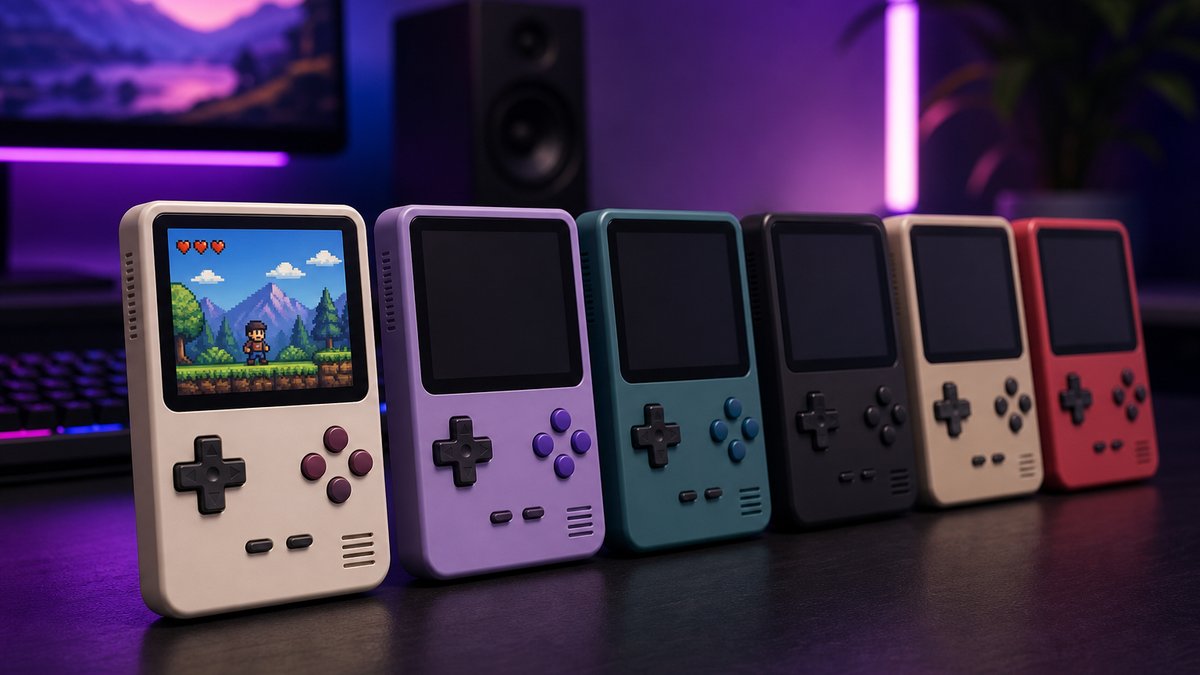
The picks at a glance
Nine retro gaming handhelds under $100 stand out in 2026. They are the Miyoo Mini Plus, R36S, Anbernic RG35XX H, Anbernic RG35XX SP, TrimUI Brick, and Anbernic RG40XX H. The TrimUI Smart Pro, Miyoo Mini Flip, and Anbernic RG40XX V round out the roster. Each wins a specific use case rather than an overall crown.
| Device | Typical price | Best for | Screen | Firmware |
|---|---|---|---|---|
| Miyoo Mini Plus | ~$65 | Pocket carry | 3.5" IPS, 640×480 | OnionOS |
| R36S | ~$45 | Cheapest entry | 3.5" IPS, 640×480 | ArkOS |
| Anbernic RG35XX H | ~$73 | Analog sticks + HDMI | 3.5" IPS, 640×480 | MuOS, Knulli |
| Anbernic RG35XX SP | ~$75 | Clamshell protection | 3.5" IPS, 640×480 | MuOS, MinUI, Knulli |
| TrimUI Brick | ~$80 | Sharpest screen | 3.2" IPS, 1024×768 | CrossMix OS |
| Anbernic RG40XX H | ~$85 | Biggest screen + battery | 4.0" IPS, 640×480 | MuOS, Knulli |
| TrimUI Smart Pro | ~$55 | Widescreen on a budget | 4.96" IPS, 1280×720 | CrossMix OS, Knulli |
| Miyoo Mini Flip | ~$60 | Smallest clamshell | 2.8" IPS, 750×560 | OnionOS, MinUI |
| Anbernic RG40XX V | ~$60 | Vertical + analog stick | 4.0" IPS, 640×480 | MuOS, Knulli |
Prices move around week to week on these devices, sometimes by $10 or more. Treat the numbers above as typical street prices, not guarantees.
How these picks were chosen
Every pick had to meet four tests. The tests: active custom firmware support, clean PS1-era performance, build quality that survives daily carry, and a track record in community reviews. Man Talk built this list from published specifications and the documented consensus of the r/SBCGaming community and specialist reviewers, not from paid placements.
That last point matters in this niche. The budget handheld market is flooded with near-identical devices, and many roundups simply repeat spec sheets. Community testing catches what specs miss: mushy shoulder buttons, screens that wash out in sunlight, and chips that throttle after twenty minutes. Where the community disagrees with the marketing, this guide sides with the community. The staff behind Man Talk bring more than 35 years of combined video game experience to these picks. No first-person testing claims are made here; when a claim needs a source, it comes from documented owner reports and published reviews.
Miyoo Mini Plus: the pocket favorite (~$65)
The Miyoo Mini Plus is the default recommendation for anyone who wants retro games in an actual pocket. It is roughly the size of a deck of cards, runs OnionOS, and handles everything from NES through PS1 cleanly.
The 3.5-inch IPS screen runs at 640×480, a 4:3 ratio that matches how retro games were designed. OnionOS, the community firmware built for Miyoo devices, is widely considered the most polished software experience on any budget handheld. Setup takes minutes and save states work everywhere.
The trade-offs are real. The Cortex-A7 chipset stops at PS1; N64 and PSP are out of reach. There is no Bluetooth, no HDMI output, and no analog stick. The 3000mAh battery delivers roughly 4 to 6 hours depending on the system being emulated. None of that hurts its core mission. For Game Boy, SNES, Genesis, and PS1 on the go, nothing under $100 is more pleasant to live with.
R36S: the cheapest real option (~$45)
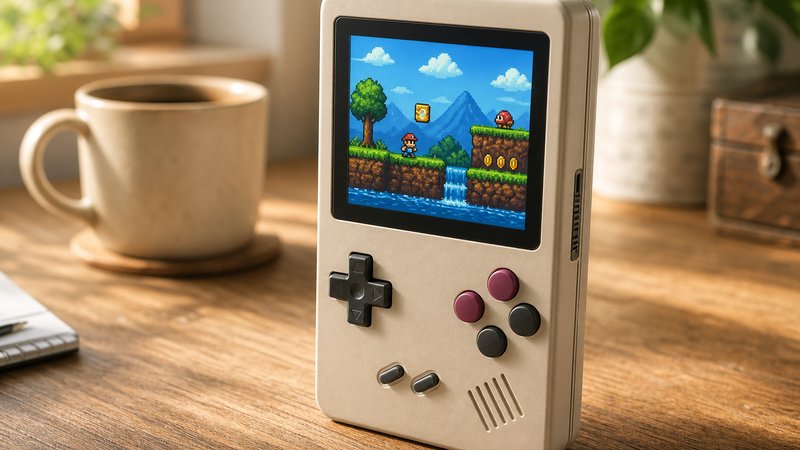
The R36S is the least expensive handheld worth buying, at around $45. It pairs a 3.5-inch 640×480 IPS screen with dual analog sticks, which no other device near its price offers.
Those sticks matter because they open the door to N64 and PSP titles that need analog input. Performance in those systems is entry-level, with stutter in demanding games, but 8-bit and 16-bit libraries and PS1 run well. The community firmware of choice is ArkOS, which replaces a rough stock interface.
Be careful when ordering. The R36S is heavily cloned, and marketplaces are full of lookalike listings with inferior screens. Buying from an established seller and checking recent reviews is the practical defense. Build quality is acceptable rather than impressive, which is the honest price of a $45 device. As a first handheld, or a glovebox spare, it is hard to argue with.
Anbernic RG35XX H: sticks and HDMI (~$73)
The Anbernic RG35XX H puts the proven Allwinner H700 chip in a horizontal, PSP-style body with dual analog sticks and mini-HDMI output. It is the pick for playing on a TV as well as on the go.
The horizontal layout spreads your hands out, which most people find more comfortable than a vertical body for sessions past half an hour. The analog sticks handle N64 and PSP input properly, and HDMI out turns it into a small console for the living room. Firmware support is strong, with MuOS and Knulli both active.
Against the Miyoo Mini Plus, the RG35XX H gives up pocketability and the OnionOS experience. Its build feels a step below the Miyoo and TrimUI devices, according to owner reports. What you get back is flexibility: more systems playable, more ways to play them, and a screen that matches the class standard at 640×480.
Anbernic RG35XX SP: the clamshell (~$75)
The Anbernic RG35XX SP folds shut like the Game Boy Advance SP it imitates, protecting its 3.5-inch screen in a bag or pocket. It runs the same H700 chip as the RG35XX H, so performance is identical.
The hinge holds any angle up to fully flat, and the closed shell means no screen protector and no anxiety about keys and coins. Dual microSD slots let the operating system live on one card and the game library on another, which makes firmware updates painless. The 3300mAh battery runs 2 to 8 hours depending on the emulated system.
The known weakness, echoed across community reviews, is the L2 and R2 shoulder buttons, which need more pressure than they should. PS1 runs perfectly, and Dreamcast and N64 are playable. For anyone nostalgic for the GBA SP era, this is the emotional favorite as well as a practical one.
TrimUI Brick: the screen king (~$80)
The TrimUI Brick fits a 1024×768 panel into a 3.2-inch Game Boy-shaped body, giving it the highest pixel density of any handheld under $100. Pixel art has never looked cleaner at this price.
That resolution is the whole story. Game Boy, SNES, and GBA titles render with a crispness the 640×480 class cannot match. The buttons click with a precision owners consistently praise, and CrossMix OS gives it a polished community firmware. Bluetooth and 5GHz WiFi are included, which the Miyoo Mini Plus lacks.
Two caveats. At 3.2 inches the screen is the smallest here, so RPGs with dense menus can feel cramped. The device also runs warm in long sessions, a repeated note in owner threads. DS and PS1 run well, and Dreamcast mostly works. Buyers who care most about image quality in 4:3 classics should start here.
Anbernic RG40XX H: big screen, big battery (~$85)
The Anbernic RG40XX H carries the largest screen and battery in this guide. That means a 4-inch 640×480 IPS panel and a 5000mAh cell rated for 5 to 7 hours. It is the strongest N64 and Dreamcast performer under $100.
The extra inch of display makes a real difference in text-heavy games, and the horizontal layout with dual analog sticks mirrors the RG35XX H formula. HDMI output and the MuOS and Knulli firmware ecosystem carry over as well.
The cost is bulk. This is a backpack device, not a pocket one, and it is the heaviest option here. For a commuter who wants one device covering everything from NES through Dreamcast, this is the pick. The RG40XX H is the ceiling of what $100 currently buys.
TrimUI Smart Pro: the widescreen bargain (~$55)
The TrimUI Smart Pro pairs a 4.96-inch 1280×720 IPS screen with a street price near $55. No other device in this guide puts this much display in front of the player per dollar spent.
The catch sits in the shape. The panel is 16:9 widescreen, while nearly every retro console drew its games for 4:3 displays. Classic libraries therefore run with black bars at the sides. PSP titles, built for widescreen, fill the panel and look like they belong there. The Allwinner A133P chip, a quad-core Cortex-A53 part, lands close to Anbernic's H700 in real performance. The 5000mAh battery ties the RG40XX H for the largest cell in this guide.
CrossMix OS, the same community project behind the TrimUI Brick firmware, replaces the stock software well, and Knulli supports it too. Dual Hall-effect analog sticks with RGB lighting cover N64 and PSP input properly. The trade-offs are honest ones. The plastics feel lighter and cheaper than Anbernic's, according to owner reports. There is no video output, so this is a purely portable machine. For a first handheld where screen size matters more than pocket size, the Smart Pro is the strongest budget answer.
Miyoo Mini Flip: the smallest clamshell (~$60)
The Miyoo Mini Flip folds the Mini Plus formula into a clamshell measuring under 68mm on its longest side. Released in October 2025, it sells for around $60 and protects its own screen when shut.
The 2.8-inch panel runs at 750×560, which works out to 334 pixels per inch. Only the TrimUI Brick packs pixels tighter among these picks. The chip is the same dual-core Cortex-A7 family as the Mini Plus, so the ceiling stays at PS1 with partial DS support. Firmware support arrived quickly, with OnionOS, MinUI, and Allium builds all documented for the device.
The compromises are the flip side of the size. The 2500mAh battery is the smallest in this guide, and runtimes trail the Mini Plus. There is no headphone jack and no Bluetooth, so audio means the built-in speakers, which reviewers describe as thin. The buttons are genuinely small, and large hands will notice within minutes. Against the RG35XX SP, the Flip wins when pocket size is the whole argument. The SP wins everywhere else.
Anbernic RG40XX V: vertical with an analog stick (~$60)
The Anbernic RG40XX V is the vertical, Game Boy-shaped option with modern range. It launched at $59.99 and pairs a 4-inch 640×480 IPS screen with a single Hall-effect analog stick.
Inside sits the same H700 chip as the RG35XX H, SP, and RG40XX H. Emulation ceilings are therefore identical: PS1 perfect, N64 and Dreamcast good, PSP playable. Mini-HDMI output, 5GHz WiFi, Bluetooth 4.2, and dual microSD slots all carry over from the horizontal models. The 3200mAh battery is rated for around six hours. MuOS and Knulli both support it, matching the rest of Anbernic's XX line.
Opinion splits on this device more than on any other pick here. Supporters call it the best vertical value Anbernic makes. Critics, Retro Dodo's review among them, call it one vertical too many from a crowded release schedule. The honest read: the single stick sits low, twin-stick games are ruled out, and tall bodies cramp shoulder buttons. Buy it for Game Boy and SNES nostalgia with an N64 safety net. Skip it if analog-heavy games are the point.
What these handhelds can and cannot emulate
Every device in this guide runs Game Boy, NES, SNES, Genesis, and PS1 without meaningful problems. N64, Dreamcast, and PSP range from playable to good depending on the device. PS2 and GameCube do not run acceptably on any handheld under $100.
| System | ~$45–65 tier | ~$70–85 tier |
|---|---|---|
| Game Boy / GBC / GBA | Perfect | Perfect |
| NES / SNES / Genesis | Perfect | Perfect |
| PS1 | Perfect | Perfect |
| Nintendo DS | Good | Good to great |
| N64 | Playable, some stutter | Good (RG40XX H strongest) |
| Dreamcast | Hit or miss | Good (SP and RG40XX H) |
| PSP | Some titles | Playable at native resolution |
| PS2 / GameCube | No | No |
Can a $100 handheld run N64 and Dreamcast well?
Partially, and device choice decides it. The RG40XX H handles both systems most consistently in this price class, per community compatibility reports. The H700-based Anbernics manage playable results in most titles. The Miyoo Mini Plus does not attempt them at all. Demanding games like Conker or F-Zero X expose the limits quickly.
What does it take to play PS2 or GameCube?
A different budget. Those consoles need roughly Snapdragon 865-class power, which starts around $150 in devices like the Retroid Pocket line and climbs from there. Anyone whose dream library is PS2-era should save for that tier instead of buying twice.
Does custom firmware change what a device can emulate?
At the margins, yes. Projects like MuOS, Knulli, and OnionOS ship tuned emulator settings, newer cores, and per-game overclock profiles. That can move a stuttering N64 title from rough to playable. What firmware cannot do is add horsepower. A chip that lacks PS2-class power under stock software lacks it under every replacement. Firmware documentation is also where the compatibility truth lives. MuOS and Knulli both publish supported-device lists, and OnionOS runs only on the Miyoo Mini line. Checking those lists before ordering beats trusting a marketplace listing every time.
How well do arcade games run?
Very well, with one setup catch. Capcom and Neo Geo arcade boards from the 90s run cleanly on every device in this guide. The FinalBurn Neo and MAME emulator cores handle them. The catch is that arcade emulators demand ROM sets matched to the exact core version. Mismatched sets fail silently, which looks like a broken device when it is really a file problem. Later 3D arcade hardware, such as Sega's NAOMI board, is a stretch for the $70-plus tier and a wall for everything cheaper.
What to check before you buy any budget handheld
Five checks separate a good purchase from a returned one: screen ratio, firmware support, storage design, battery honesty, and seller reputation.
- Screen ratio. Retro games were built for 4:3 displays. A 16:9 screen means stretched images or black bars. Every device in this guide is 4:3 except the widescreen TrimUI Smart Pro.
- Custom firmware support. Stock software on budget handhelds ranges from clumsy to broken. Confirm an active community project exists for the exact model: OnionOS for Miyoo, CrossMix for TrimUI, MuOS or Knulli for Anbernic, ArkOS for the R36S.
- Storage design. Dual microSD slots, like on the RG35XX SP, keep the operating system and the game library separate. That makes updates and reflashing far less painful.
- Battery claims. Capacity alone misleads. A 3000mAh cell playing GBA outlasts a 5000mAh cell driving a bigger screen through Dreamcast. Check per-system runtime reports, not the spec sheet number.
- Seller reputation. Clones and quiet hardware revisions are common, especially for the R36S. Buy from established sellers and read reviews from the past few weeks, not the past few years.
Common first-buyer mistakes
Seven mistakes cause most of the regret in this hobby. Every one of them is avoidable at the ordering stage or during the first hour of setup.
- Trusting the preloaded card. The included microSD is the most common failure point and the most common source of broken games. Format it, or shelve it, and build a clean library on a name-brand card.
- Buying for consoles the hardware cannot run. A $60 device will never scratch a PS2 or GameCube itch. Match the purchase to the compatibility table above, not to hope.
- Skipping custom firmware. Stock software hides half of what these devices can do. Each project targets specific hardware, so confirm the right one exists for the exact model before ordering.
- Paying launch-week markups. New models routinely list high at third-party resellers before official stock settles. Waiting a few weeks on a fresh release usually saves $10 to $20.
- Ignoring the control layout. No analog stick means no comfortable N64 or PSP. Vertical bodies cramp shoulder-button games. Picture your ten favorite games on the exact layout before paying.
- Buying two devices to start. Collection creep is real in this hobby, and forums are full of drawer-bound handhelds. One well-chosen device covers years of play.
- Overspending on storage. Hundreds of games through SNES fit in a single gigabyte, while PS1 discs run roughly 300MB to 700MB each. A 128GB card covers a serious collection.
Alternatives considered and rejected
Plenty of popular sub-$100 devices did not make this list. Each one lost to a listed pick on price, firmware health, screen, or availability, and the reasons are worth naming.
Anbernic RG35XX Plus. It carries the same H700 chip as the RG35XX H but drops the analog sticks. The H and SP cost a few dollars more and do meaningfully more. Not a bad device, just an outranked one.
PowKiddy RGB30. A square 720×720 panel makes it the darling of Pico-8 fans, and that 1:1 screen is a genuine novelty. Every mainstream console fills it with borders, though, and firmware momentum sits with Anbernic, Miyoo, and TrimUI. A specialist tool, not a first handheld.
Anbernic RG28XX. Charming at 2.83 inches, but the Miyoo Mini Flip now does tiny better: a sharper panel, folding screen protection, and similar money.
R36S clones and lookalikes. Marketplaces overflow with R36 variants wearing names like Max and Pro. Panels, batteries, and internals vary unit to unit, and the ArkOS builds that tame the real R36S often fail on them. Cheap turns expensive when the screen is wrong.
Sub-$30 no-name devices. The Data Frog SF2000 tier ships washed-out screens, laggy emulation, and no serious firmware scene. Money saved there tends to get spent again within a month on something from the list above.
The original Miyoo Mini. Perpetually scarce since its 2021 debut, and the Plus improved the battery and added WiFi. There is no reason to hunt one down at collector prices.
Accessories worth adding to the order
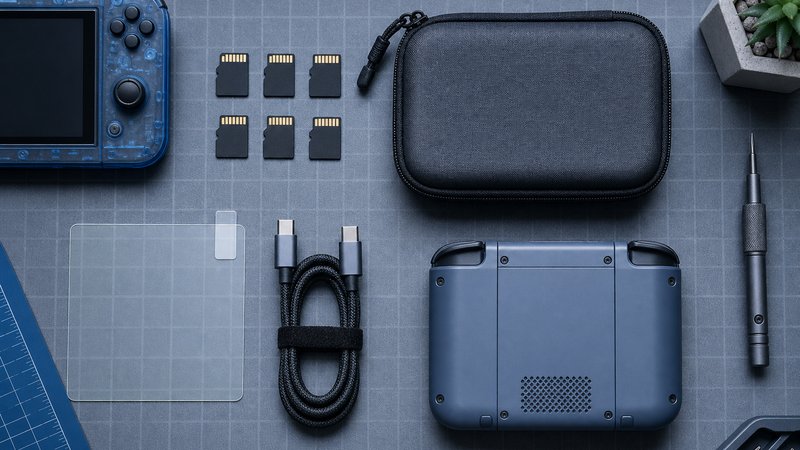
Three accessories improve every handheld in this guide: a name-brand microSD card, a tempered glass screen protector, and a hard carry case. Together they add $25 to $35 and prevent the most common failures owners report.
The microSD card matters most. Nearly every preloaded card that ships with these devices is a slow, no-name unit. Corrupted cards are the single most reported failure in owner communities. A 128GB or 256GB card from SanDisk or Samsung with an A1 rating fixes it. The A1 specification guarantees a minimum of 1500 random read operations per second, which is what keeps game menus and save states responsive. Expect to pay $12 to $20.
The screen protector earns its place on the open-faced devices, meaning every pick here except the two clamshells. Clamshell owners can skip it, since the RG35XX SP and Mini Flip protect themselves by folding shut. A hard case does the same job for the whole device in a bag.
One accessory to skip: third-party chargers marketed for these handhelds. Every device here charges over standard USB-C, so any existing phone charger handles it. The marked-up "handheld charging kits" on marketplace listings add nothing.
Which one should you actually buy?
Buy the Miyoo Mini Plus if pocket carry matters most. Buy the RG35XX SP if you want the screen protected in a bag. Buy the TrimUI Brick for the sharpest picture, the RG40XX H for the biggest screen and battery, and the R36S if $45 is the budget. The Smart Pro, Mini Flip, and RG40XX V fill narrower niches: widescreen size per dollar, the smallest carry, and vertical nostalgia.
A simpler way to decide: match the device to the newest console you genuinely want to play. If the answer is PS1 or older, the Miyoo Mini Plus or R36S covers it and saves money. If the answer includes N64, Dreamcast, or PSP, the RG35XX H, SP, or RG40XX H is worth the extra $10 to $20. If the answer is PS2 or GameCube, none of these are the right purchase, and the honest advice is to save for a $150-plus device.
Is it worth waiting for the next new model?
Usually not, and here is why. Anbernic alone shipped more than a dozen models in the past two years, and the release pace across brands is close to monthly. There is always something newer six weeks away. The sub-$100 tier in particular improves in small steps, not leaps, because the chips available at this price change slowly. A device bought today from this list will play the same 8-bit through PS1 libraries just as well in three years. There is one sensible exception. If a specific announced model fixes the exact flaw that bothers you, waiting a month is reasonable. A clamshell version of a device you already like would qualify. Waiting for the market to settle is not reasonable, because it never does.
The retro handheld market moves fast, with new models landing nearly every month. The Man Talk retro handhelds section tracks new releases and follow-up guides as they publish, and the about page explains how recommendations get made here. Manufacturer spec sheets for current models are published at Anbernic's official site.
Frequently asked questions
Can a handheld under $100 play PS2 or GameCube games?
No. PS2 and GameCube emulation needs far more processing power than any sub-$100 device offers. Handhelds in this price range top out at PS1, with partial N64, Dreamcast, and PSP support. Reliable PS2 emulation starts around $150 with Snapdragon-class chips such as the Retroid Pocket line.
Are retro gaming handhelds legal to buy and use?
Yes, the hardware and the open-source emulators it runs are legal. The gray area is game files. Downloading ROMs for games you never bought is piracy. Backing up cartridges and discs you own is widely treated as personal fair use, though the law differs by country.
Do budget retro handhelds come with games installed?
Most listings ship a microSD card preloaded with thousands of titles, but quality is poor: duplicates, mislabeled files, and games the hardware cannot run well. The standard community advice is to format that card, install custom firmware, and load a game library you have sourced yourself.
What is custom firmware and do you actually need it?
Custom firmware is free community-built software that replaces the clunky stock interface on these devices. Projects like OnionOS, MuOS, Knulli, and CrossMix OS add cleaner menus, better emulator settings, and save-state features. It is not strictly required, but nearly every experienced owner installs it.