Man Talk may earn a commission when you buy through links on this page. That never changes what gets recommended, and it never changes the price you pay.
Best Microfiber Towels for Car Detailing
The best microfiber towels for cars in 2026 come from The Rag Company. The Eagle Edgeless 500, around $20 for three, is the paint-safe workhorse for buffing and product removal. The Gauntlet, around $20, covers drying with a 900 GSM twisted loop pile. The Edgeless 365 ten-pack, around $22, handles everything else. Chemical Guys and Meguiar's fill the budget shelf, and Griot's Garage sits at the premium end. Choosing well comes down to three specs: GSM, edge design, and fiber blend. Those three details decide whether a towel lifts grit safely or drags it across the clear coat. Most swirl marks on daily drivers trace back to bad towels and bad towel habits, not the wash itself. This guide explains each spec in plain language and compares the towels worth buying. It covers the drying towels, the applicators, and the care rules that keep everything working for years. It also names the towel mistakes that quietly ruin paint. By the end you will know exactly which towels belong in the cabinet and which stay on the discount shelf.
The picks at a glance
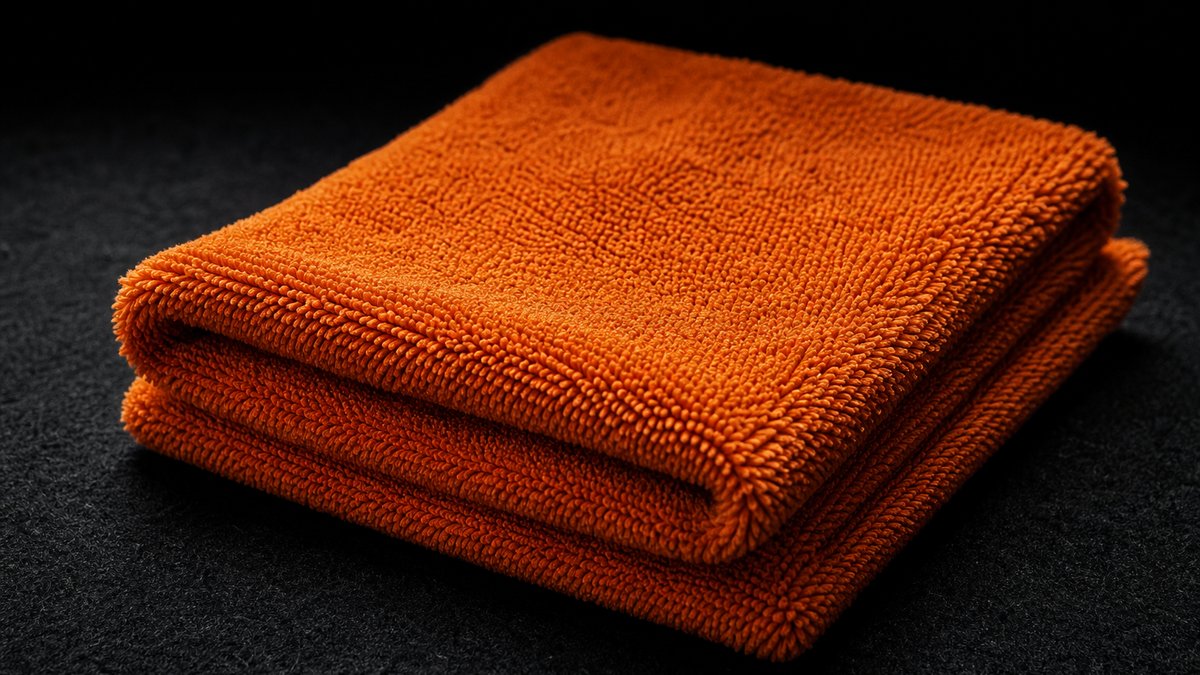
Six picks cover nearly every microfiber need in car detailing. The Rag Company Eagle Edgeless 500 leads for paint work, The Gauntlet leads for drying, and the Edgeless 365 covers general duty. Chemical Guys Woolly Mammoth, Meguiar's Supreme Shine, and the Griot's Garage PFM drying towel round out the budget and premium ends.
| Towel | Typical price | Construction | Best for |
|---|---|---|---|
| The Rag Company Eagle Edgeless 500 | ~$20 (3-pack, 16x24) | 500 GSM, 70/30, edgeless | Buffing and paint work |
| The Rag Company Edgeless 365 | ~$22 (10-pack, 16x16) | 365 GSM, 70/30, edgeless | All-purpose exterior |
| The Rag Company Gauntlet | ~$20 (20x30) | 900 GSM twisted loop hybrid | Drying sedans and coupes |
| Chemical Guys Woolly Mammoth | ~$28 (25x36) | Deep plush drying pile | Drying trucks and SUVs |
| Griot's Garage PFM Drying Towel | ~$35 | Premium dense weave | Coated and show cars |
| Meguiar's Supreme Shine | ~$12 (3-pack) | Plush, satin edged | Interior and glass duty |
Microfiber prices swing with pack sizes and sales, sometimes by several dollars. Treat every number here as a typical street price, not a guarantee.
How these picks were chosen
Every pick had to pass three tests: paint-safe construction, a blend and weight matched to the job, and a consistent owner-community track record. Man Talk built this list from published specifications and documented owner consensus, not paid placements or sponsorships.
That matters because towel marketing leans hard on big GSM numbers and vague softness claims. Community archives on r/AutoDetailing and the Autopia forums catch what spec sheets hide. Common finds: edges that mar, endless lint, and towels that fall apart by wash ten. Where owners disagree with the marketing, this guide sides with the owners. Man Talk staff come from a background of classic cars and car audio, where paint care is part of the hobby. No first-person testing claims are made here. When a claim needs a source, it comes from published specifications and documented owner reports.
What GSM actually tells you
GSM stands for grams per square meter, the weight of one square meter of fabric. Towels from 200 to 300 GSM suit glass, wheels, and interiors. The 300 to 400 range covers general exterior work. Plush 500 to 600 GSM towels handle buffing, and dedicated drying towels start around 800 GSM.
| GSM range | Feel | Use it for |
|---|---|---|
| 200-300 | Thin, fast drying | Interior, glass, wheels, door jambs |
| 300-400 | Balanced all-rounder | Product removal, general exterior work |
| 500-600 | Plush cushion | Buffing polish and wax, quick detailer, final wipes |
| 800-1,200+ | Deep twisted pile | Drying full vehicles |
The number matters for one reason: cushioning. A denser pile gives stray grit somewhere to go besides across the paint. The particle sinks down into the fibers instead of getting pinned between towel and clear coat. That is why the plush tier owns buffing duty and why thin utility towels stay off paint. Higher is not automatically better, though. A 600 GSM towel smears glass cleaner around, and a thin 250 GSM cloth is the right call inside door jambs. Matching weight to task beats buying the heaviest towel on the page.
Edgeless vs edged: the border decides paint safety
Edgeless towels have no stitched border, just a clean-cut or ultrasonically sealed perimeter. Traditional towels are hemmed with overlock stitching, usually hard polyester thread. That stitched ridge is the part most likely to scratch paint, which makes edgeless the standard for any towel touching clear coat.
The physics are simple. Microfiber pile is soft, but the thread holding a hem together is not. Drag that hem across a panel under pressure and it can leave fine, straight scratches. Ultrasonic cutting solves the problem by melting and sealing the towel's edge with no thread at all. Some premium towels use a soft microfiber or silk band instead, which achieves the same goal.
Edged towels still have a place. On wheels, exhaust tips, door jambs, and interior plastics, the hem cannot hurt anything. Paying extra for edgeless there is wasted money. On paint, the upgrade costs a dollar or two per towel and removes the most common contact risk.
The blend: what 70/30 and 80/20 mean
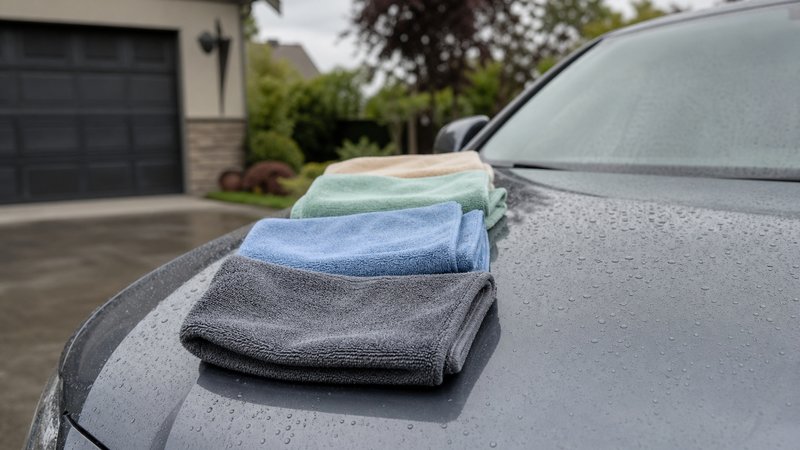
Microfiber is a blend of polyester and polyamide. Polyester is the structural, scrubbing fiber, and polyamide is the softer, absorbent one. A 70/30 towel carries more polyamide, so it runs softer and holds more liquid. An 80/20 towel is firmer and tougher, which suits utility work.
| Blend | Character | Best use |
|---|---|---|
| 70/30 | Softer, more absorbent, gentler on clear coat | Paint towels, buffing, drying |
| 80/20 | Firmer, more durable, cheaper to make | Interior, wheels, glass, utility |
The ratio shows up in the price, since polyamide costs more than polyester. That is one honest reason premium towels cost premium money. The other manufacturing detail worth knowing is fiber splitting. Quality microfiber is split during production into wedge-shaped strands that grab and hold dirt. Many bargain towels skip proper splitting, so they push grime around instead of lifting it. A quick check: a well-split towel drags noticeably against dry skin, while a cheap one feels slick.
The Rag Company Eagle Edgeless 500: the standard paint towel (~$20 for three)
The Eagle Edgeless 500 is a 500 GSM, 70/30 Korean microfiber towel with an ultrasonically cut edge. A three-pack of 16 by 24 inch towels runs about $20, with a 16 by 16 size also sold. For buffing compounds, sealants, and quick detailers, this is the default recommendation.
The Rag Company has specialized in microfiber since 1999, and the Eagle line is its best-known product. The dual-pile design puts longer fibers on one side for buffing and shorter fibers on the other for tighter wiping. Owners consistently report these towels surviving years of washing without shedding or going stiff. Current specifications and sizes are published at The Rag Company's official site.
The honest caveats: 500 GSM is overkill for glass, and the 16 by 24 size can feel bulky for tight trim work. The cheaper Edgeless 365 ten-pack covers volume work and smaller jobs. A sensible cabinet runs the 365s for everything ordinary and saves the 500s for paint.
Drying towels: twisted loop construction wins (~$20 to $35)
Twisted loop towels are the current standard for drying. The weave twists fibers into tight vertical loops that wick water fast instead of just soaking it. The Rag Company Gauntlet, around $20 in the 20 by 30 inch size, dries most sedans in one or two passes.
Microfiber can hold several times its own weight in water, and twisted loop construction stacks more fiber into every square inch. That density does two jobs at once. It pulls water off the panel quickly, and it lets the towel glide with almost no pressure. Less pressure means less chance of grinding a missed grit particle into the clear coat. Older waffle weave towels still earn a spot for glass and small jobs, but they saturate faster on full panels.
Size matters as much as weight here. A 20 by 30 towel handles a sedan, while trucks and SUVs justify a second towel or a 25 by 36 size. A drying aid spray helps too, adding lubrication while the towel works.
Do you really need a drying towel over 1,000 GSM?
Not usually. The jump from 900 to 1,200 GSM adds absorbency, but a quality 900 GSM towel already dries a sedan without wringing. The heavier towels earn their price on trucks, or for anyone who hates making a second pass. Below 600 GSM, though, a drying towel starts trading safety for price. Thin towels saturate quickly, and a saturated towel pushed harder is exactly how drying scratches happen.
Chemical Guys, Meguiar's, and Griot's: the rest of the shelf
Chemical Guys and Meguiar's cover the budget end, with serviceable towels from about $10. Griot's Garage covers the premium end, with its PFM drying towel around $35. The middle of the market is where The Rag Company earns the default pick.
The Chemical Guys Woolly Mammoth is the best-known big drying towel, around $28 in a 25 by 36 inch size. Its deep plush pile drinks a full truck's worth of water. Owner threads note it sheds lint for the first few washes, so run it through the machine alone twice before it touches paint. The brand's Workhorse 16 by 16 towels, around $10 for three, are honest utility cloths for interior and wheel duty.
Meguiar's Supreme Shine three-packs run about $12 and show up in every big-box store. They are plush and absorbent, but the satin edges mean careful owners keep them off delicate paint. The Water Magnet drying towel, around $12, is a workable waffle weave for occasional washers.
Griot's Garage PFM towels sit at the top of the price range, with the drying towel around $35. The dense weave absorbs remarkably well, and owners treat the price as justified on coated or show cars. For a daily driver, the cheaper twisted loop options deliver most of the same performance.
Why cheap towels scratch paint
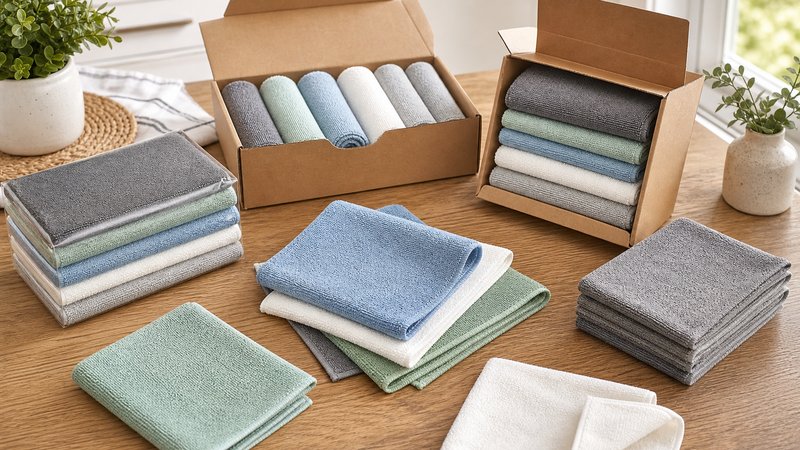
Cheap towels scratch because of hard stitched edges, unsplit coarse fibers, and thin pile that pins grit against the paint. Factory clear coat is only about 2 mils thick, roughly half the thickness of a sheet of printer paper. A bad towel wears that finish away one wipe at a time.
The failure modes stack. Bargain multipacks often use recycled or unsplit fiber that feels slick and pushes dirt around instead of lifting it. Thin pile gives trapped particles nowhere to hide, so they ride between towel and panel like sandpaper. Polyester hems finish the job on edges and curves. None of this shows up on day one under garage lighting. It shows up months later as swirl marks under direct sun. Machine polishing to remove those swirls costs far more than good towels ever would.
Household fabrics are worse still. Cotton terry, paper towels, and old t-shirts all leave micro-scratches on clear coat, even when perfectly clean. The fix costs little: a $20 pack of proper towels and the discipline to keep them sorted by job.
Washing and care rules that make towels last
Five rules keep microfiber working. Wash new towels before first use, keep cotton out of the load, and skip fabric softener and bleach. Keep wash water warm rather than hot, and dry on low or no heat. Broken rules show up as streaking, linting, and lost absorbency.
- Wash before first use. New towels carry manufacturing residues that cause streaks and dull absorbency. One warm cycle fixes it.
- Keep cotton out of the load. Cotton lint embeds in microfiber and turns a paint towel into a lint dispenser. Wash microfiber with microfiber only.
- Never use fabric softener. Softener coats the fibers and permanently blocks absorbency. Dryer sheets do the same thing. One softener wash can ruin a towel for good.
- Watch the temperature. Wash at or below 104°F and skip bleach. High heat degrades the fine synthetic fibers.
- Dry low or air dry. High dryer heat melts fiber tips, and melted tips scratch. Air drying is free and risk-free.
Sorting is the other half of care. Once a towel touches wheels or an engine bay, it never returns to paint duty, even after washing. Color coding solves this without any thinking: one color for paint, one for wheels, one for interior. Dedicated microfiber detergents exist and work well, but any mild, fragrance-free liquid detergent does the job.
Applicators: the small pads that finish the job
Applicator pads handle the products the towels later remove. Foam pads suit wax and sealant, microfiber applicators suit dressings and ceramic coatings, and both cost about $1 to $3 each. Buying a dozen at once means a fresh applicator for every product.
The rule mirrors the towel rules: one applicator per product, washed or retired after use. A pad loaded with old tire dressing has no business near paint. Coating applicators in particular are effectively single-use, since cured ceramic resin will not wash out. Cheap foam blocks from the paint aisle work fine for tire dressing, so save the microfiber pads for the finish work.
Which microfiber towels should you actually buy?
Start with three purchases: an Edgeless 365 ten-pack for general work, three Eagle Edgeless 500s for paint, and one Gauntlet for drying. That is roughly $60 and covers a full wash day properly. Add a glass towel and a handful of applicators as the routine grows.
How many towels does one car actually take?
More than most people expect. A full exterior wash and dry uses one or two drying towels. Interior, glass, and wheels add three or four utility cloths. Buffing wax or sealant burns through two or three plush towels, since a loaded towel stops working. A dozen towels in rotation is a realistic floor for anyone washing at home twice a month. Running short mid-job is how one towel ends up doing three jobs, and that is how scratches happen.
Towels are one piece of a safe wash routine, not the whole system. The two bucket car wash method covers the technique that keeps grit out of the wash mitt in the first place. The best car detailing kits for beginners guide covers the products those towels will apply and remove. The Man Talk car detailing section collects every guide in this series, and the about page explains how recommendations get made here.
Frequently asked questions
What GSM microfiber towel is safe for car paint?
Anything from 350 GSM up is generally safe on paint, and 500 GSM plus is the comfortable zone for buffing and drying. The extra fiber density cushions grit away from the clear coat. Lower GSM towels around 200 to 300 belong on glass, wheels, door jambs, and interior surfaces instead.
Do microfiber towels scratch car paint?
A clean, quality microfiber towel used with light pressure will not scratch paint. Scratches come from contamination, from hard stitched edges, or from cheap towels with coarse fibers. The towel picks up grit, and the grit does the cutting. Dedicated towels for wheels and paint, washed properly, prevent most damage.
Can microfiber towels go in the dryer?
Yes, on low or no heat only. High heat melts the fine polyester fibers and permanently ruins the towel's softness and absorbency. Air drying is the safest option. Never add dryer sheets, since the softening chemicals coat the fibers the same way liquid fabric softener does.
How long do microfiber towels last?
A quality 70/30 towel survives hundreds of wash cycles with proper care, which usually means years of regular use. Retire a towel from paint duty when the pile flattens, the fibers fray, or absorbency drops. Old paint towels still earn their keep on wheels, engine bays, and door jambs.