Man Talk may earn a commission when you buy through links on this page. That never changes what gets recommended, and it never changes the price you pay.
Best Interior Car Detailing Products for 2026
The best interior car detailing products fall into seven categories. Those are: an all-purpose cleaner, an interior detailer spray, leather care, ammonia-free glass cleaner, detailing brushes, a capable vacuum, and a water-based UV protectant. Build that list from P&S, Meguiar's, Chemical Guys, 303, and Adam's, and the complete setup runs roughly $100 to $150. That kit covers every surface in a modern cabin: plastic, vinyl, fabric, carpet, leather, screens, and glass. Most people buy the wrong half first. Glossy dressings and scented sprays get the attention, while the cleaners, brushes, and extraction tools that do the real work get skipped. This guide fixes that order. Each section covers one category, what it costs, which specific bottles earn a spot, and the mistakes that quietly ruin interiors. Silicone shine on a dashboard is the big one. The recommendations rest on manufacturer dilution charts, published specs, and the documented consensus of the detailing community, not marketing claims. No first-person testing is claimed anywhere. By the end you will know what belongs in the kit, what to pay for it, and which popular products to leave on the shelf.
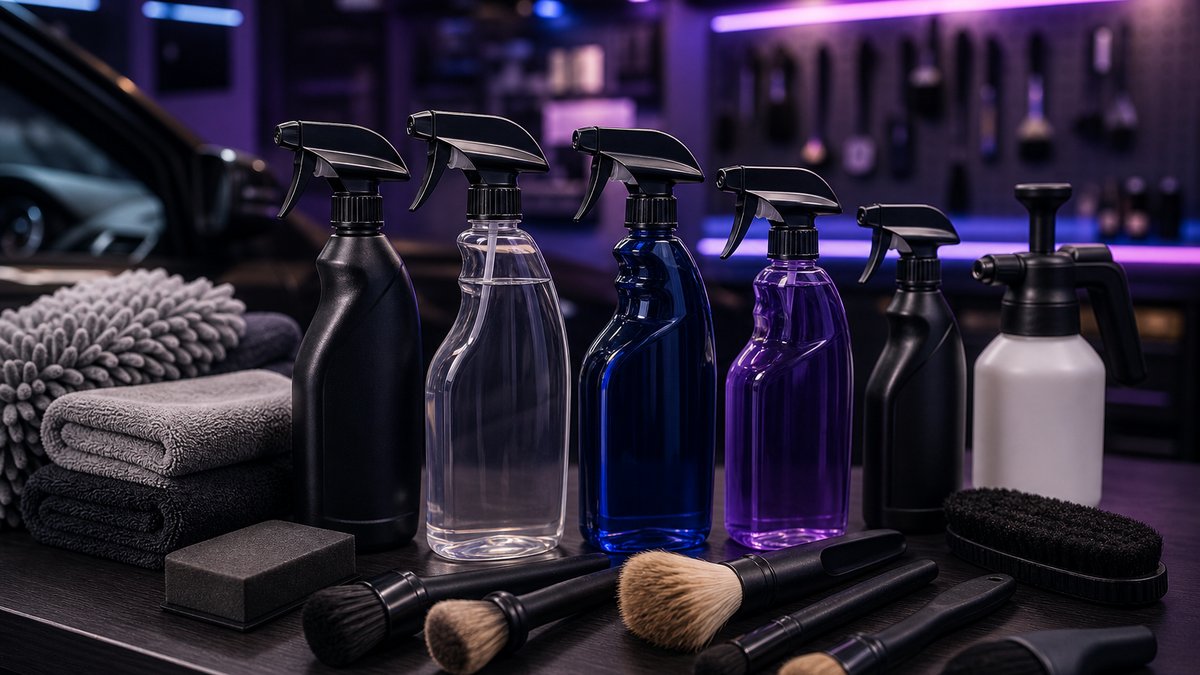
The full interior kit at a glance
Nine items make a complete interior detailing kit. They run from a $6 glass cleaner to a $120 spot extractor, and the core products together cost about $100. Each one handles a job the others cannot.
| Product | Typical price | Job |
|---|---|---|
| P&S Xpress Interior Cleaner (32 oz) | ~$13 | Everyday cleaner for plastic, vinyl, and fabric |
| Meguiar's D101 All Purpose Cleaner (1 gal) | ~$15 | Concentrate for carpet and heavy grime |
| Meguiar's Ultimate Interior Detailer | ~$11 | Weekly wipe-downs and light dust |
| Chemical Guys leather cleaner + conditioner | ~$27 | Leather seats and trim |
| Stoner Invisible Glass (19 oz) | ~$6 | Ammonia-free glass and mirrors |
| Detailing brush set (boar's hair + nylon) | ~$15 | Vents, seams, buttons, carpet edges |
| Drill brush kit | ~$18 | Machine scrubbing for mats and carpet |
| 5-gallon shop vacuum | ~$70 | Dry soil pickup |
| Bissell Little Green extractor | ~$120 | Stains and deep fabric cleaning |
Prices move between retailers and bottle sizes, sometimes by a few dollars. Treat every number in this guide as a typical street price, not a quote. Concentrates stretch those numbers much further, which the next sections cover. Man Talk staff come from a background of classic cars and car audio, where paint care is part of the hobby.
One category is missing on purpose: air fresheners. Odor is a cleaning problem, not a fragrance problem. Smells live in carpet, headliner fabric, and vents, and extraction removes them at the source. A cabin cleaned this way needs no cover scent.
How these picks were chosen
Every product here had to pass four tests. The tests: label-stated surface safety, published dilution or usage guidance, a consistent community track record, and wide retail availability. Man Talk built this list from those sources, not from paid placements.
The interior care shelf is crowded with lookalike sprays that differ mostly in scent, so outside validation matters. Car and Driver named Chemical Guys Total Interior its best overall interior cleaner for 2026, and community threads broadly back that style of product. Forums like r/AutoDetailing fill in what labels leave out: which formulas streak, which residues attract dust, and which bottles leak. Where marketing and community experience disagree, this guide sides with the community. No first-person testing claims appear here; every recommendation is researched reference, drawn from documented owner reports and manufacturer documentation.
All-purpose cleaner: the base of the kit
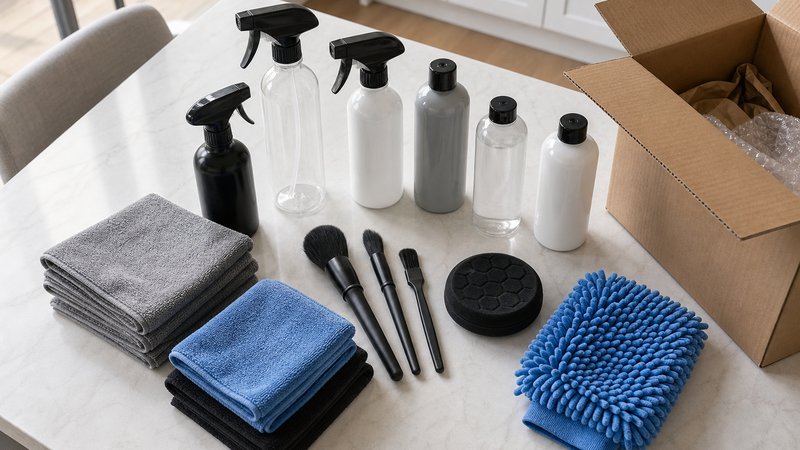
An all-purpose cleaner handles door panels, dashboards, cupholders, vinyl, and carpet. P&S Xpress Interior Cleaner, about $13 for 32 ounces, is the gentle everyday pick. Meguiar's D101, about $15 per gallon, is the concentrate for serious grime.
Xpress earned its following in professional shops because one mild formula covers nearly the whole cabin. The label clears it for leather, vinyl, plastic, and fabric, and it dries without residue. That matters on the surfaces you touch every day. A cleaner that leaves film turns into a dust magnet within a week.
D101 works differently. It ships as a concentrate designed to dilute at 10:1, meaning ten parts water to one part cleaner. One gallon therefore mixes into roughly eleven gallons of working product, which drops the cost per spray bottle under two dollars. Strong mixes handle floor mats, pedal areas, and trunk carpet that mild sprays cannot touch.
Concentrate users need two cheap extras: a labeled spray bottle and a measuring cup. Mixing by eye is how dashboards get bleached, and bottle labels prevent the classic mix-up between strong and weak batches.
Why do dilution ratios matter so much?
Because the same jug can be safe or destructive depending on the mix. Run a concentrate too strong and black plastics turn chalky white, fabric dye lifts, and residue streaks across trim. Community stain-removal threads are full of exactly this mistake. The fix costs nothing. Start at the weakest ratio on the label, test a hidden patch, and only mix stronger when the weak version fails. Never spray any cleaner directly onto buttons, screens, or switches. Spray the towel instead, then wipe.
Interior detailer sprays for the weeks in between
An interior detailer is a mild, ready-to-use spray for dust, fingerprints, and light grime. Meguiar's Ultimate Interior Detailer runs about $11, Chemical Guys Total Interior about $13, and Adam's Interior Detailer about $17. Any of the three keeps a clean cabin clean.
These sprays are not replacements for an all-purpose cleaner. They are maintenance products, built to wipe a week of dust and hand oils off surfaces already in decent shape. The 303 Interior Cleaner, about $13, deserves a mention for one specific strength. Its label clears it for touchscreens, LCD panels, and glass, which makes it the safest single bottle for a modern screen-heavy dashboard.
| All-purpose cleaner | Interior detailer | |
|---|---|---|
| Strength | Adjustable, mild to aggressive | Fixed and mild |
| Best for | Ground-in dirt, spills, carpet | Dust, fingerprints, weekly wipe-downs |
| Screens | Only if the label allows it | Often screen safe, check the label |
| Follow-up | Damp wipe to remove residue | None, dries clean |
The practical split: deep clean with the all-purpose cleaner a few times a year, then hold the result with a detailer spray. Most owners reach for the detailer ten times for every one deep-cleaning session. Scent is the honest tiebreaker among the big three, since performance differences are small.
Leather cleaner and conditioner
Leather needs two products: a pH-balanced cleaner and a conditioner. The Chemical Guys leather cleaner and conditioner pair costs about $27 and covers both jobs. Clean first, condition after, roughly every three months.
Nearly all leather in modern cars is coated, meaning a thin polyurethane layer seals the pigmented hide. Cleaning happens on that coating, not on raw leather. That is why pH-balanced formulas matter: harsh alkaline cleaners dull and eventually crack the coating. It is also why kitchen degreasers and magic erasers belong nowhere near a seat.
The conditioner side keeps that coating flexible and adds UV resistance, which slows the fading sun-baked seats show first. Lexol's cleaner and conditioner pair, about $22, is the long-running budget alternative. Application guides are worth a read before starting; Chemical Guys publishes free leather care walkthroughs on its official site.
Glass cleaner: ammonia-free or nothing
The one hard rule for interior glass is ammonia-free formula only. Ammonia can attack the dye and adhesive layers in aftermarket window tint, which sits on the inside of the glass. Stoner Invisible Glass, about $6, is the default answer.
Tint film makes this a real risk rather than a technicality. The film is applied to the interior surface, so every interior glass wipe touches it directly. Several classic household glass cleaners list ammonia among their active ingredients. Invisible Glass advertises an ammonia-free formula built for automotive use, and it has held a spot in detailing guides for years.
Technique decides the streaks. Use two towels: one to clean, one to buff dry. Tight-weave glass towels or waffle-weave microfiber leave less lint than plush towels. The microfiber towel guide covers which weaves suit glass and which ruin it.
Can household glass cleaner work in a car?
Only when the label says ammonia-free, and even then it is a compromise. Beyond the tint risk, household formulas often overspray onto plastics they were never designed for. Ammonia fumes are also unpleasant in a closed cabin. A dedicated automotive glass cleaner costs about six dollars and removes the guesswork, so the savings never justify the risk.
Brushes and drill attachments
Two brush types cover the cabin: soft boar's hair for vents, dashboards, and buttons, and stiff nylon for carpet and mats. A mixed set costs $10 to $20. A drill brush kit, about $18, adds machine scrubbing for heavy carpet.
Brushes exist because towels cannot reach seams, stitching, vents, or the gap around every button. Agitation also does most of the actual cleaning; the chemical only loosens the grime. A soft natural-bristle brush moves dust out of tight spots without scratching piano-black trim. The stiff nylon side handles floor mats, sill plates, and carpet edges. Keep interior brushes separate from wheel and exterior brushes, because one trip through brake dust turns a soft brush into sandpaper.
Drill brushes take the same idea and add torque. Chemical Guys sells drill-mounted carpet brushes in tiered stiffness levels, with medium duty aimed at mats, durable upholstery, and trunk liners. Generic multi-piece kits cost around $18 and chuck into any household drill. Two cautions apply. Keep the drill at low speed, because high-speed friction heat can fray or melt carpet fibers. And never put a drill brush on leather, vinyl, or any hard trim.
Vacuums and extractors
A 5-gallon shop vacuum, about $70, out-pulls nearly every cordless stick vacuum on carpet grit. The Bissell Little Green, about $120, adds extraction: it sprays cleaning solution into fabric and pulls the dirty water back out.
Dry vacuuming always comes first, and suction power decides how much sand actually leaves the carpet. A corded shop vacuum with a crevice tool reaches seat rails and the seat-console gap where most debris collects. Typical 5-gallon models sit in the $60 to $80 range and pull harder than most battery-powered sticks. Cordless convenience is real, but suction fades as batteries drain.
The extractor is the upgrade that changes results on stains. Spraying solution deep into fabric and immediately vacuuming it out lifts soil a towel can only smear. Professional heated extractors run well past $1,000, which is why the sub-$150 Little Green class became the standard home answer. Leave doors open afterward and let airflow finish the drying, since damp carpet padding invites mildew.
Do you really need an extractor on day one?
No. Light stains respond to a diluted cleaner, a brush, and a dry towel used in blotting passes. The extractor earns its price once kids, pets, or daily coffee enter the picture. Buying it later loses nothing, since it works just as well on old stains as on fresh ones.
UV protectant: why silicone shine backfires
The last product on a dashboard should be a water-based UV protectant, not a glossy dressing. 303 Aerospace Protectant, about $18 for 32 ounces, blocks UV fading and dries to a matte, factory-look finish. Glossy silicone products cause windshield glare and collect dust.
A dashboard spends its life under glass in direct sun, and UV exposure is what fades and eventually cracks vinyl. A protectant with UV blockers slows that aging the way sunscreen slows a burn. 303 is the long-standing reference because it is water based, dries without an oily film, and repels dust instead of trapping it.
Tire-shine-style silicone dressings do the opposite, and they show up in cars constantly. The gloss reflects onto the windshield, which turns into real glare at low sun angles. The oily surface grabs dust and smears onto glass and clothing. Worst of all, overspray makes steering wheels and pedals slick, which is a genuine safety problem rather than a cosmetic one.
Application matters as much as product choice. Spray the protectant onto an applicator pad or towel, never directly at the dash. Keep it off the steering wheel, pedals, and shifter entirely.
The right order to clean an interior
Order matters because dirt falls downward and every product oversprays onto something. The proven sequence runs trash, dry vacuum, panels, leather, carpet, protectant, and glass last.
- Clear the cabin. Pull trash, mats, and everything loose. Shake and clean the mats outside the car.
- Vacuum top down. Seats first, then rails and crevices, carpet last. Gravity sends debris downward the whole time.
- Clean plastics and panels. Work a detailer or diluted all-purpose cleaner into vents and seams with brushes.
- Handle the leather. Clean with the pH-balanced formula, then apply conditioner and let it absorb.
- Scrub or extract fabric. Treat carpet and cloth seats, then leave doors open to dry.
- Protect. Apply UV protectant to the dash, door tops, and trim with an applicator pad.
- Finish with glass. Every earlier step leaves overspray and fingerprints on it.
Glass moving last is the step most people miss. Protectant mist and cleaner overspray settle on interior glass throughout the job, so cleaning it first guarantees doing it twice.
What should you buy first on a budget?
Start with about $50: P&S Xpress, a brush set, Invisible Glass, and a pack of quality microfiber towels. A household vacuum fills the gap until a shop vacuum makes sense. The extractor, leather pair, and protectant come next.
Towels deserve a real share of that first budget. Cheap towels scratch gloss trim and push dirt around instead of lifting it. Quality automotive microfiber, typically a 70/30 polyester and polyamide blend, grips soil and survives hundreds of washes. Dedicated glass towels and interior towels, kept separate, prevent cross-contamination from oily products.
Anyone starting completely from zero has a second option: a boxed kit. The detailing kits for beginners guide compares packages that bundle wash and interior basics at a discount. Building piece by piece still wins on quality per dollar, but kits win on simplicity.
Interior products run out and get rebought, which makes this the category where small price differences compound. The Man Talk car detailing section tracks consumables, tools, and technique guides as they publish. The about page explains how recommendations get made here.
Frequently asked questions
Do you need a different cleaner for every interior surface?
No. A quality interior all-purpose cleaner at the right dilution handles plastics, vinyl, fabric, and carpet. The two exceptions are leather and glass. Leather needs a pH-balanced cleaner that respects its protective coating, and glass needs an ammonia-free formula. Three products cover nearly every cabin surface.
Is tire shine safe to use on a dashboard?
No. Glossy silicone dressings create windshield glare, attract dust, and leave a slick film on surfaces you touch while driving. Some solvent-based formulas can dry vinyl over repeated use. A water-based protectant such as 303 Aerospace Protectant blocks UV rays and dries to a clean matte finish.
How often should a car interior get a full detail?
A full interior detail two to four times a year keeps most cabins in good shape. Weekly upkeep matters more: a quick vacuum, a wipe with an interior detailer, and glass as needed. Daily drivers with kids, pets, or long commutes need the full treatment more often.
Can an all-purpose cleaner damage interior plastics?
Yes, when used too strong. Concentrates mixed too hot can whiten black plastics, strip dye from fabric, and leave chalky residue. Follow the label chart, start with the weakest listed ratio, and test a hidden spot first. Meguiar's D101, for example, is designed to run at 10:1.