Man Talk may earn a commission when you buy through links on this page. That never changes what gets recommended, and it never changes the price you pay.
Best Car Detailing Kits for Beginners
The best car detailing kit for beginners in 2026 is the Chemical Guys Arsenal Builder, at roughly $70 for the popular 14-item build. It bundles pH-balanced soap, a foam gun, wash media, and protection in one box. The Meguiar's Ultimate Kit (around $55) is the pick for guided, step-by-step products. The Armor All Premier 8-piece (around $30) covers interior and exterior on a tight budget. The strongest kits bundle the four things a first detail actually requires. Those are dedicated car soap, a safe wash mitt, a real drying towel, and some form of protection. The differences show up in wheel cleaners, foam tools, microfiber quality, and how far the bottles stretch. Cheap towels and dish soap cause most beginner paint damage, not bad technique. This guide compares eight starter kits on contents, coverage, and honest weak points. The comparisons rest on published contents lists and the collective judgment of the detailing community, not marketing copy. It also covers the two-bucket method every kit quietly assumes you know. By the end you will know which box fits your car, your parking situation, and your budget.
The kits at a glance
Eight starter options stand out in 2026. Six brands cover them: Chemical Guys, Meguiar's, Griot's Garage, Turtle Wax, Armor All, and Adam's Polishes. The lineup runs from the $20 Turtle Wax box to the $90-plus Adam's bundles. Each wins a specific budget and situation rather than an overall crown.
| Kit | Typical price | Best for | Covers | Standout inclusion |
|---|---|---|---|---|
| Chemical Guys Arsenal Builder | ~$70–$100 | Starting from zero | Exterior + light interior | Foam gun and bucket |
| Chemical Guys 7-item kit | ~$45 | Chemicals only | Wash, wheels, interior | Diablo wheel gel |
| Meguiar's Ultimate Kit | ~$55 | Guided first detail | Exterior + detailer | Clay bar |
| Griot's Garage Starter Kit | ~$80 | Chemicals with a guarantee | Exterior + trim | Synthetic clay + carnauba wax |
| Turtle Wax Complete 4-piece | ~$20 | Store-shelf impulse buy | Exterior + interior detailer | Wax and Dry spray wax |
| Armor All Premier 8-piece | ~$30 | Tight budgets | Interior + exterior | Tire shine + protectant |
| Armor All Complete 4-piece | ~$20 | Bare minimum | Exterior basics | Wash-and-wax combo |
| Adam's Polishes kits | ~$90 and up | Premium microfiber | Varies by bundle | Top-tier towels |
Prices move around from week to week and retailer to retailer, sometimes by $15 or more. Treat the numbers above as typical street prices, not guarantees. Retailers also shuffle bundle contents seasonally, so verify the item count on the exact listing before checkout.
How these picks were chosen
Every kit had to meet four tests. The tests: pH-balanced chemistry, coverage of a full basic wash, refills that are easy to buy, and a track record in owner reviews. Man Talk built this list from published kit contents and the documented consensus of the r/AutoDetailing community and specialist reviewers, not from paid placements.
That framing matters in this category. Detailing forums are blunt about kits, and the standing advice on r/AutoDetailing is that single products beat bundles on quality. The advice is fair for enthusiasts and mostly wrong for a first purchase. A beginner does not yet know which wheel cleaner or drying towel to pick from thousands of options. A matched kit removes that research burden and teaches the routine. Where the community flags a specific weakness, such as leaky shipping or linty towels, this guide passes the warning along. Man Talk staff come from a background of classic cars and car audio, where paint care is part of the hobby. No first-person testing claims are made here; every product judgment traces to documented owner reports and published contents lists.
Chemical Guys Arsenal Builder: the full setup (~$70)
The Chemical Guys Arsenal Builder is the default first kit for anyone starting from an empty garage shelf. The popular 14-item build runs about $70 and includes soap, a bucket, a foam gun, wash media, and an SiO2 ceramic spray.
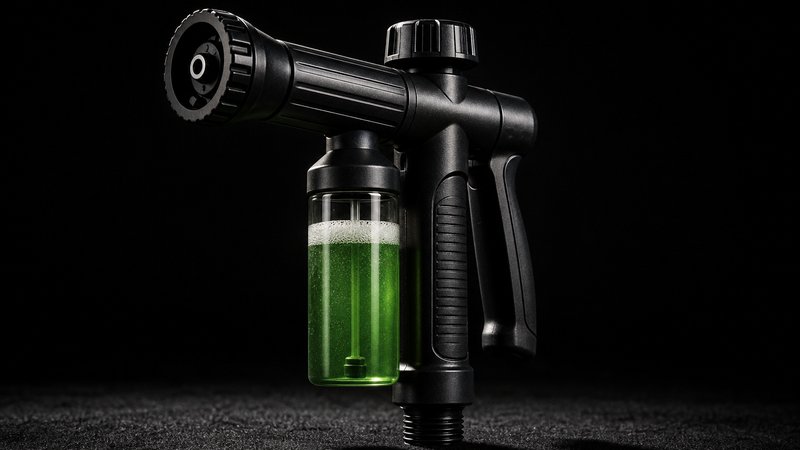
The foam gun is the piece that separates this kit from everything else near its price. It threads onto a standard garden hose and produces thick, clinging foam without a pressure washer. That suits apartment lots and shared driveways as well as suburban garages. The Arsenal Builder is really a product line, sold in several sizes from roughly $70 to $100. Smaller builds trim the product count, while larger ones add interior and tire extras. The SiO2 ceramic spray in current builds is rated for roughly two to three months of protection per application. The included pH-balanced soaps will not strip existing wax or sealant, which keeps early mistakes cheap.
The weak points come straight from owner reviews. New towels in the box can shed lint until they have been through a wash cycle. The flat tire-shine applicator fights larger truck tires. And the 16-ounce bottles cover roughly six to eight washes, so refills arrive sooner than the box price suggests. None of that undercuts the core appeal. Matched pH-balanced products, real wash media, and a working foam tool in one order is a strong start. Full contents lists for each build are published at Chemical Guys' official site.
Chemical Guys 7-item kit: chemicals without the gear (~$45)
The Chemical Guys 7-item cleaning kit strips the formula down to chemicals and a mitt for around $45. It covers the three areas that matter most: paint, wheels, and interior.
The box pairs a citrus-scented high-foam wash soap with Diablo wheel and rim cleaner and Total Interior cleaner-protectant. A plush microfiber mitt rounds it out. Diablo is the standout, per owner reports. The gel clings to the wheel face, breaks down brake dust for a few minutes, and rinses off without scrubbing. Brake dust is metallic and bonds to wheel finishes, which is why body soap alone never quite shifts it.
Know what is missing before ordering. There is no bucket, no drying towel, and no foam tool, which surprises buyers expecting a full setup. The recurring complaint in reviews is shipping condition, with some bottles arriving leaky or partially empty. As a first purchase for someone who already owns buckets and towels, though, this is the cheapest clean entry into the Chemical Guys ecosystem. It also works as a refill round after a larger kit runs dry.
Meguiar's kits: the guided route (~$55)
Meguiar's boxed kits are the easiest starter sets to buy in person, stocked in nearly every auto parts store. The Ultimate Kit, around $55, earns the beginner nod because it includes a clay bar alongside wash, wax, and detailer products.
The clay bar is the sleeper inclusion. Washing removes loose dirt, but bonded contamination such as rail dust, sap, and overspray stays put. Clay lifts it off and leaves paint smooth enough for wax to bond properly. No other mainstream starter kit at this price includes one. Community guides consistently describe Meguiar's formulas as forgiving, with plain step-by-step directions printed on the labels. That reputation is why beginner threads so often end with a Meguiar's recommendation.
The catch is that Meguiar's rotates its kit lineup often, and contents shift between revisions. One box leans on Gold Class shampoo and a liquid wax; another swaps in a quik detailer or an interior spray. Check the printed contents list rather than the product photo before buying. Meguiar's also sells a dedicated waterless wash kit, covered later in this guide, for anyone washing without a hose.
Griot's Garage Starter Car Care Kit: guarantee-backed chemicals (~$80)
The Griot's Garage Starter Car Care Kit lists at about $80 and bundles six chemicals, including a synthetic clay and a carnauba wax. Every product carries the company's customers-for-life satisfaction guarantee.
The box covers the full exterior sequence. Contents run from car wash and wheel cleaner through a spray detailer, synthetic clay, Best of Show wax, and a vinyl-and-rubber dressing. Alongside Meguiar's, it is one of only two kits here with clay included. The wax is a high-carnauba formula with a strong owner-review reputation for depth on dark paint.
The gaps mirror the Chemical Guys 7-item kit. No bucket, no mitt, and no drying towel come in the box, so budget roughly $40 more for accessories. The premium over Meguiar's buys the guarantee and brand consistency. Owner reviews treat Griot's as a step up from parts-store labels, and the return policy has no time limit.
Armor All Premier and Complete kits: the budget shelf (~$20 to $30)
Armor All covers the bottom of the price range with two kits. The Premier 8-piece, around $30, handles interior and exterior in one box. The Complete 4-piece, around $20, covers exterior basics with full-size products rather than samples.
The Premier kit bundles Ultra Shine Wash and Wax, Extreme Tire Shine, glass cleaner, a multi-purpose interior cleaner, and the classic Original Protectant. A microfiber wash pad is included, though owners note it runs small for trucks and SUVs. The wash-and-wax soap leaves a light layer of protection in the same pass, which is the whole point at this tier. One product, one step, a visibly richer finish on tired paint.
The 4-piece box holds a 16-ounce wash and wax, a 10-ounce protectant spray, a 20-ounce tire foam, and a 25-count tub of glass wipes. It suits a teenager's first car, a work truck, or a glovebox travel set. The trade-offs are known and consistent across reviews. Bottles sometimes arrive leaking, and the glass wipes dry out when the tub seal breaks in transit. Check every seal on delivery day and request a replacement early if something arrived damp or dry. Neither kit includes a wheel cleaner, so budget one separately when brake dust is heavy.
Turtle Wax kits: the store-shelf option (~$20 to $50)
Turtle Wax kits are the easiest boxes to buy on impulse, stocked at nearly every big-box store. The Complete Car Care 4-piece kit runs around $20 with four 16-ounce products. The Hybrid Solutions ceramic bundles sit closer to $50 and add SiO2 chemistry.
The 4-piece box holds Zip Wax car wash, Wax and Dry spray wax, Wet'n Black tire shine, and Dash and Glass interior detailer. The Turtle Wax name has been on shelves since 1953, so the refill supply is effectively endless. Zip Wax is a wash-and-wax, layering light protection during the wash itself.
The trade-offs match the price. No mitt, no bucket, and no towels come in the box, and the spray wax measures durability in weeks, not months. The step-up Hybrid Solutions kits swap in ceramic wash-and-wax and a ceramic spray coating for around $50. Those formulas bond best on clean, decontaminated paint, which a beginner's daily driver rarely has.
Adam's Polishes kits: the premium step up (~$90 and up)
Adam's Polishes sits at the premium end of starter kits. Its bundles typically cost 30 to 50 percent more than Chemical Guys equivalents with similar product counts. The extra money mostly buys better towels and richer formulas.
Owners of dark vehicles gravitate here for a reason. Black and deep blue paint shows every swirl mark, and softer towels plus higher-lubricity soaps reduce the marring risk. Community consensus rates Adam's bundled wash media among the best packed into any kit. Adam's also backs its products with a satisfaction guarantee, which softens the sticker price somewhat.
The honest advice from enthusiast threads: Adam's is the second kit, not the first. A beginner learning the routine will make towel mistakes, cross-contaminate wash media, and overuse product. Making those mistakes with $30 of Armor All hurts less than making them with $100 of premium gear. Skip this tier until the two-bucket routine feels automatic, then upgrade the pieces that wore out first.
Alternatives considered and rejected
Four kit categories were cut from this guide: no-name marketplace bundles, machine-polisher combo kits, giant gift boxes, and accessory-heavy sets near $100. Each one fails a beginner on chemistry, risk, or plain value.
No-name marketplace bundles. Dozens of unbranded 20-piece kits float around online between $25 and $40. None publish pH data, none maintain refill lines, and the seller names change monthly.
Polisher combo kits. Some bundles pair chemicals with a dual-action machine polisher. A quality unit like the Griot's G9 costs about $180 on its own, and machine correction is a second-season skill.
Giant gift boxes. The 25-piece holiday sets pad their item counts with air fresheners, wipes, and novelty cloths. The chemicals inside usually match the $20 lineup sold separately.
Accessory-heavy sets near $100. Griot's, for example, sells a Starter Car Wash Kit at about $100 that adds wash accessories to its chemicals. The Arsenal Builder covers the same ground, plus a foam gun, for roughly $30 less.
What a beginner detailing kit must actually include
Five items make a kit viable: pH-balanced soap, a microfiber wash mitt, a real drying towel, wheel cleaner, and paint protection. A kit missing two or more of those is a partial purchase, whatever the box claims.
- pH-balanced car soap. Dish soap strips wax and sealant and dries rubber trim. Dedicated soap cleans while leaving existing protection alone.
- A microfiber wash mitt. Chenille noodles trap grit deep in the fibers instead of dragging it across paint. Sponges do the opposite.
- A dedicated drying towel. Twist-loop microfiber around 1,000 GSM soaks up a full panel in one pass. Bath towels scratch.
- Wheel cleaner. Wheels carry the dirtiest, most metallic grime on the vehicle. A dedicated cleaner dissolves brake dust that soap leaves behind.
- Protection. A spray wax, sealant, or ceramic spray makes the next wash easier and shields the paint between washes.
Glass cleaner and an interior cleaner are the two most common additions worth having, and most kits above the $25 mark include at least one. A second bucket and grit guards rarely appear in any kit. They cost around $15 to $20 combined at a hardware store and matter more than any single chemical. That gap leads straight into the technique every kit assumes you already know.
The two-bucket method every kit assumes you know
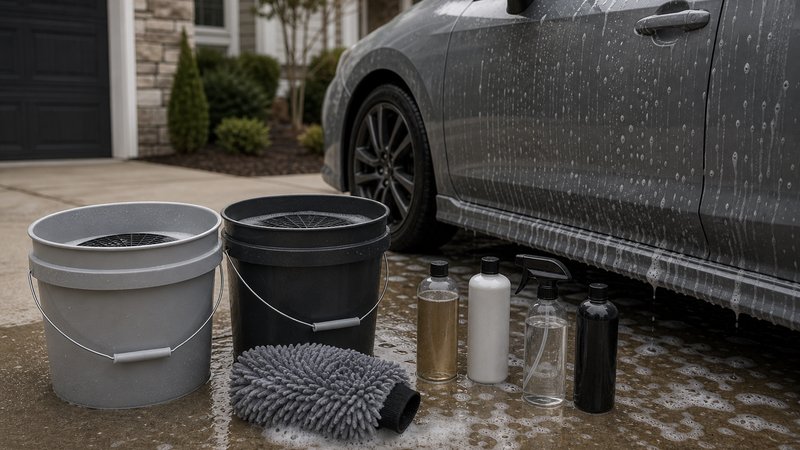
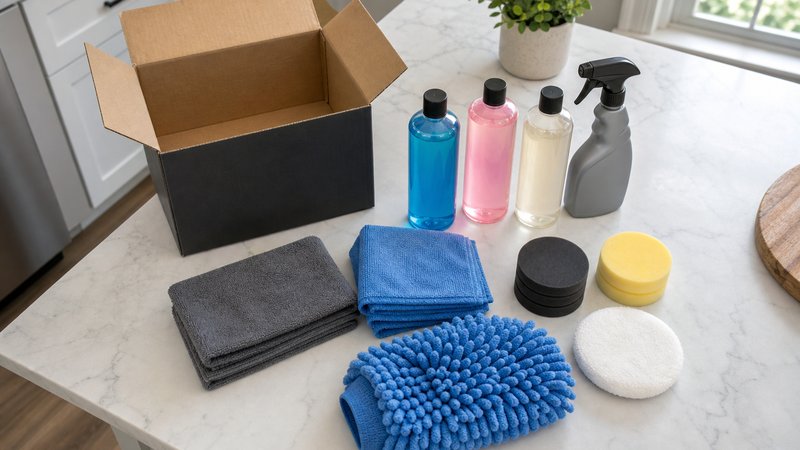
The two-bucket method uses one bucket for soapy water and one for plain rinse water, each with a grit guard. The wash mitt gets rinsed after every panel, so grit picked up from the car never returns to the paint.
The routine is simple. Load the mitt in the soap bucket, wash one panel, then scrub the mitt against the grit guard in the rinse bucket. Reload with soap and move to the next panel. Work top to bottom, since the lower third of any vehicle carries the heaviest dirt. Detailing guides commonly credit this method with cutting wash-induced marring by as much as 80 percent versus single-bucket washing. Swirl marks are mostly a washing injury, not a driving one.
Two habits round it out. Wash wheels first with their own mitt and water, so brake dust never touches paint media. And never wash in direct sun or on hot panels, because soap dries fast and leaves spots. Morning shade and a cool surface make every product in every kit work better.
Do you really need a foam cannon or foam gun?
No. Foam is a pre-soak and a lubricant, not the actual wash. A foam cannon needs a pressure washer; a foam gun runs off a garden hose and gets most of the way there. Either one loosens dirt before the mitt arrives, which lowers the marring risk. The two buckets and the soap still do the real work. Treat foam gear as a nice inclusion, like in the Arsenal Builder, rather than a requirement.
What if you cannot use a hose where you park?
Waterless wash products solve this, and Meguiar's sells a dedicated waterless kit built around its Ultimate Waterless Wash and Wax. The technique: spray one panel, wait around fifteen seconds, wipe gently in one direction, then buff with a clean towel side. High-lubricity polymers wrap the dirt so it slides off instead of scratching. The hard limit is grime level. A dusty car is a fine candidate; a muddy or salted one needs a real wash first.
The microfiber warning no kit brochure prints
Towel quality decides more outcomes than any chemical in any kit. Bundled towels are usually the cheapest component in the box, and dirty or worn microfiber is what actually puts swirl marks into paint.
Microfiber is graded by weight in grams per square meter, written as GSM. Different jobs call for different weights, and kit towels rarely say which job they were built for.
| Job | Towel type | Commonly recommended weight |
|---|---|---|
| Washing | Chenille mitt or plush towel | 350–600 GSM |
| Drying | Twist-loop drying towel | 1,000–1,200 GSM |
| Glass | Flat low-pile weave | 250–350 GSM |
| Interior and trim | Standard terry towel | 300–350 GSM |
Four care rules keep any towel safe. Wash new microfiber once before it touches paint, since fresh towels shed lint. Wash microfiber separately from cotton, which sheds fibers that clog the weave. Skip fabric softener entirely, because it coats the strands and kills their bite. And any towel that hits the ground gets demoted to wheels and door jambs forever. Those four habits cost nothing and outperform most product upgrades.
Budget for towel replacement the same way as for soap refills. A six-pack of decent all-purpose microfiber runs $10 to $15, and a proper twist-loop drying towel runs $15 to $25. Towels are consumables in this hobby, not equipment. Treating them that way is what keeps a two-year-old daily driver looking swirl-free.
Common beginner detailing mistakes
Seven mistakes cause most first-year paint damage: dish soap, single-bucket washing, hot panels, bath towels, dropped wash media, wheels washed last, and fabric softener. Every one of them costs nothing to avoid.
- Washing with dish soap. Household degreasers strip wax and sealant in a single wash and dry out rubber trim over time. pH-balanced car soap exists to prevent exactly that.
- Using a single bucket. One bucket sends every panel's grit back into the soap and onto the paint. Detailing guides link single-bucket washing to the bulk of wash-induced swirl marks.
- Washing in direct sun. Hot panels flash-dry soap and mineral-heavy water into spots and streaks. Morning shade fixes the problem for free.
- Drying with bath towels. Cotton terry is abrasive enough to leave fine scratches in modern clear coat. A 1,000 GSM drying towel is the cheapest insurance in the hobby.
- Reusing dropped wash media. A mitt that touches the ground picks up embedded grit that rinsing cannot fully remove. Demote it to wheels permanently.
- Washing wheels last. Wheels carry metallic brake dust, the harshest grime on the vehicle. Washing them first, with their own media, keeps that grit away from paint.
- Fabric softener in the towel wash. Softener coats microfiber strands and kills their ability to grab dirt. One laundry cycle can ruin a whole towel batch.
Notice that none of these are product failures. Technique, not chemistry, decides the first year.
Build your own kit vs buying a boxed kit
Assembling an equivalent setup from single products costs around $95 to $110, against roughly $70 for the Arsenal Builder box. The boxed kit wins the first purchase on price and matched chemistry. The self-built kit wins on towel quality and exact product choice.
Prices below reflect typical 2026 street prices for mid-grade single products.
| Item | Typical single-product price |
|---|---|
| pH-balanced car soap, 16 oz | ~$10 |
| Chenille microfiber wash mitt | ~$8 |
| Twist-loop drying towel | ~$20 |
| Wheel cleaner | ~$12 |
| Ceramic spray or spray sealant | ~$15 |
| Two hardware-store buckets | ~$10 |
| Two grit guards | ~$15 |
| Six-pack of all-purpose microfiber | ~$12 |
| Build-your-own total | ~$102 |
The total lands just over $100. Plain five-gallon buckets run about $5 each at hardware stores. The self-built route also includes the two buckets and grit guards that no boxed kit ships.
The catch is decision fatigue. Eight product categories mean eight rounds of research before the first wash. The sensible sequence stays the same as the refill advice: box first, then rebuild piece by piece as products run dry.
Which kit should you actually buy?
Buy the Chemical Guys Arsenal Builder if starting from nothing. Buy a Meguiar's kit for guided products and the clay bar. Buy the Armor All Premier when the budget stops near $30, and Adam's Polishes when towel quality outranks price. Griot's Garage earns the chemicals-only slot when a guarantee matters, and Turtle Wax covers the impulse store-shelf buy.
A simpler way to decide: match the kit to the parking situation. A driveway with hose access opens up the foam-gun kits and the full two-bucket routine. An apartment lot without water points toward the waterless route and quick detailers. A garage-kept car with dark paint justifies the Adam's tier sooner, since dark finishes punish cheap towels hardest. The math favors any of them. Professional detailing runs roughly $100 to $300 per visit, so a starter kit pays for itself by the second wash.
Is it smarter to skip kits and buy single products?
Eventually, yes. Enthusiast forums push single products because bundles nearly always hide one weak item, usually the towels. For a first purchase, though, the kit still wins. Matched products remove guesswork, teach the routine, and cost less than assembling equivalents one by one. The sensible path: run a kit dry, note which products earned refills, then buy those individually at better sizes.
What to add in month two
Four upgrades come first after a starter kit: a second bucket with grit guards, a heavyweight drying towel, an iron remover, and clay. Together they run about $70 and close the gaps every boxed kit leaves open.
The second bucket and grit guards come first, at around $20 combined. They upgrade technique rather than shine, so no kit maker boxes them. A proper drying towel comes next, at $15 to $25, if the kit shipped a thin one. Those two purchases prevent more damage than any chemical upgrade on the market.
Iron remover is the first new chemical worth adding, at around $15 a bottle. It sprays on clear and turns purple as it dissolves the embedded brake-dust particles a wash mitt cannot lift. A clay bar kit, around $20, then pulls the remaining bonded contamination off the paint. Meguiar's Ultimate and Griot's buyers can skip that one, since their boxes already include clay.
Replace whichever kit product ran out first with a better single version, usually the soap or the towels. That habit converts a boxed kit into a self-built shelf over time.
Detailing is a consumables hobby, and product lineups shift every season. The Man Talk car detailing section tracks kit changes, technique guides, and product follow-ups as they publish. The about page explains how recommendations get made here.
Frequently asked questions
Is a kit better than buying detailing products separately?
For a first setup, yes. Kits bundle matched products, so nothing fights anything else, and the total cost stays under $100. Enthusiast forums often prefer buying single products for quality control. That advice fits a second round of purchases better, once you know which products you actually reach for.
Can you wash a car with dish soap and old towels?
No, and this combination causes most beginner paint damage. Dish soap strips wax and sealant and dries out rubber trim. Cotton bath towels are rough enough to leave fine scratches called swirl marks. Dedicated pH-balanced car soap and microfiber towels exist specifically to avoid both problems, and starter kits include them.
How long do the products in a starter kit last?
The 16-ounce bottles in most kits cover roughly six to eight washes, based on owner reports. A weekly washer empties a kit in about two months, while a monthly washer stretches it past half a year. Refills for Chemical Guys, Meguiar's, and Armor All products are easy to find.
Do you need a pressure washer to use a foam kit?
Not necessarily. A foam cannon requires a pressure washer, but a foam gun threads onto a standard garden hose and still produces thick foam. The Chemical Guys Arsenal Builder kits include a garden hose foam gun for this reason. Foam adds lubrication, though the two-bucket wash still does the real cleaning.