Man Talk may earn a commission when you buy through links on this page. That never changes what gets recommended, and it never changes the price you pay.
The Complete EDC Starter Kit Under $150
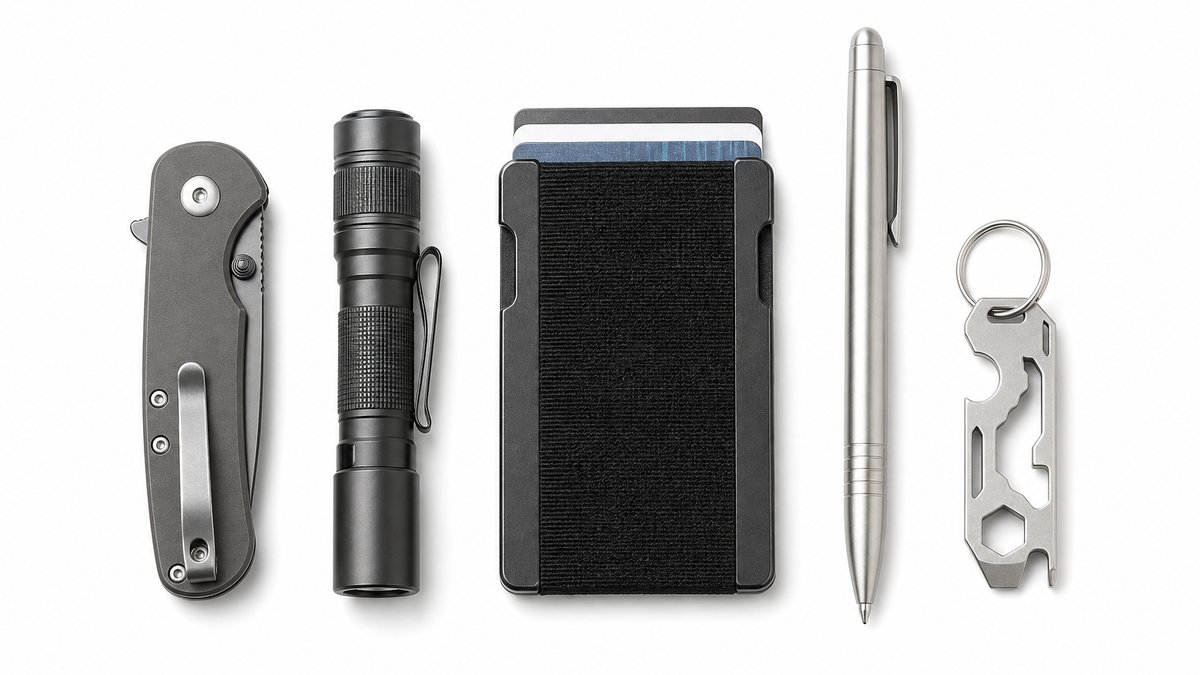
A complete EDC starter kit under $150 needs four things: a knife, a flashlight, a wallet, and a pen. The proven budget version costs about $72. That kit pairs the Ontario RAT 2 knife (around $30) with the ThruNite Archer Mini flashlight (around $14). A minimalist card wallet (around $18) and a Zebra F-701 pen (around $10) finish it. Spending the full $150 upgrades the knife to a Civivi Elementum and adds a Gerber Dime multitool. A key organizer rounds out the pocket. Every item here earns its space daily, not just in gear photos. The hard part for beginners is not finding gear. It is resisting the flood of tactical extras that add weight without adding use. This guide builds two full loadouts, one at $75 and one at $150, with typical street prices. The picks rest on published specifications and the documented consensus of the EDC community, not marketing copy. It also covers what to skip, because over-buying is the most common first mistake. By the end, the whole kit fits one order and one front pocket.
The kit at a glance
Four items make a working EDC starter kit: a folding knife, a rechargeable flashlight, a slim wallet, and a durable pen. The table below shows both builds, a $75 version and a $150 version, using typical street prices.
| Item | $75 loadout | $150 loadout |
|---|---|---|
| Knife | Ontario RAT 2 (~$30) | Civivi Elementum (~$50) |
| Flashlight | ThruNite Archer Mini (~$14) | ThruNite Archer Mini (~$14) |
| Wallet | Fabric card holder (~$18) | Metal or premium fabric minimalist (~$30) |
| Pen | Zebra F-701 (~$10) | Zebra F-701 (~$10) |
| Multitool | Skip for now | Gerber Dime (~$28) |
| Keychain | Simple split ring | Key organizer (~$15) |
| Total | ~$72 | ~$147 |
Prices move around week to week on all of these, especially the knives. Treat the numbers above as typical street prices, not guarantees. Both builds leave a few dollars of slack under their caps. That slack absorbs the price wobble and helps with shipping on smaller orders.
How this kit was chosen
Every pick had to meet four tests. The tests: daily usefulness, a proven community track record, legal-friendly sizing, and a price that makes loss survivable. Man Talk built this kit from published specifications and documented owner consensus, not from paid placements.
That loss test deserves a word. First kits get lost, confiscated at airport checkpoints, and left in jeans pockets on laundry day. Gear at this price hurts nothing when it disappears, which is exactly why beginners should start here. The track record test matters just as much. The Ontario Knife Company has made blades in New York since 1889, and the RAT series has been a community standard for over a decade. Where community testing disagrees with marketing, this guide sides with the community. Man Talk staff spent years living in Alaska and the mountains, where carry gear gets used, not displayed. No first-person testing claims are made here; when a claim needs a source, it comes from owner reports and manufacturer listings. One more note on sizing: legal-friendly blade length narrows the knife list more than any other test. Blades near 3 inches pass more local rules than blades near 4.
The flashlight: ThruNite Archer Mini (~$14)
The ThruNite Archer Mini is the kit's flashlight at around $14. It pairs a 405-lumen beam with USB-C charging and an IPX8 waterproof rating, in a penlight body that clips to a pocket.
Those specs match lights that cost three times as much. IPX8 means the light survives continuous submersion past 1 meter, so rain and puddles stop mattering. The manufacturer lists a rated beam of 87 meters and up to 7.5 hours of runtime on low. Treat the 405-lumen turbo as a short burst, since a body this small sheds heat slowly. For daily tasks like dark stairwells, dropped keys, and breaker boxes, 50 to 300 lumens does the work. One charging habit extends the built-in cell's life: top it up every week or two instead of running it to zero.
Wurkkos and Sofirn serve the same budget tier with well-reviewed lights in the $20 to $30 range. Either brand works if the ThruNite is out of stock. A full comparison of six budget lights lives in the Man Talk guide to the best EDC flashlights under $50. The short version: the Archer Mini is the benchmark, and everything else competes with it.
A keychain light is the other valid starting point. The Olight iMini 2, at around $14, rides on keys and turns on the moment it pulls free of its magnetic cap. Fifty lumens covers keyholes and dark hallways, though a pocket light remains the stronger primary. Some carriers eventually run both, and the pair still costs under $30.
The knife: Ontario RAT 2 (~$30)
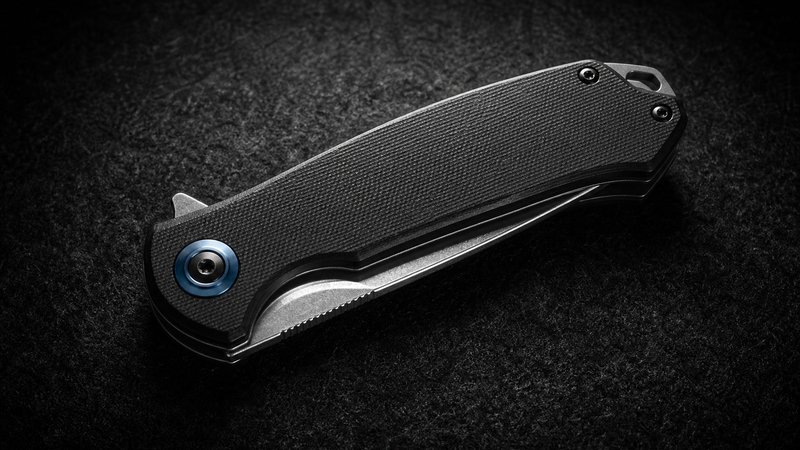
The Ontario RAT 2 is the starter knife at around $30. Its 3-inch AUS-8 blade, liner lock, and light nylon handle cover daily cutting without alarming anyone at the office.
The RAT 2 succeeds by being boring in the best way. AUS-8 steel sharpens easily on cheap stones, holds a working edge, and forgives beginner mistakes. The knife weighs under 3 ounces, and the four-position clip suits either hand and either carry position. A 3-inch blade also clears the legal line in most places, though local rules always deserve a check before carrying.
The $150 build upgrades to the Civivi Elementum at around $50. That buys a 2.96-inch D2 blade, G10 handle scales, and a ball-bearing flipper that opens with one finger. D2 holds an edge longer than AUS-8, and owner threads consistently describe the fit and finish as above the price. The Elementum is widely treated as the point where budget knives stop feeling budget. More picks at every price under $50 live in the Man Talk budget EDC knives guide, along with legal-carry notes.
The wallet: minimalist for $18 to $35
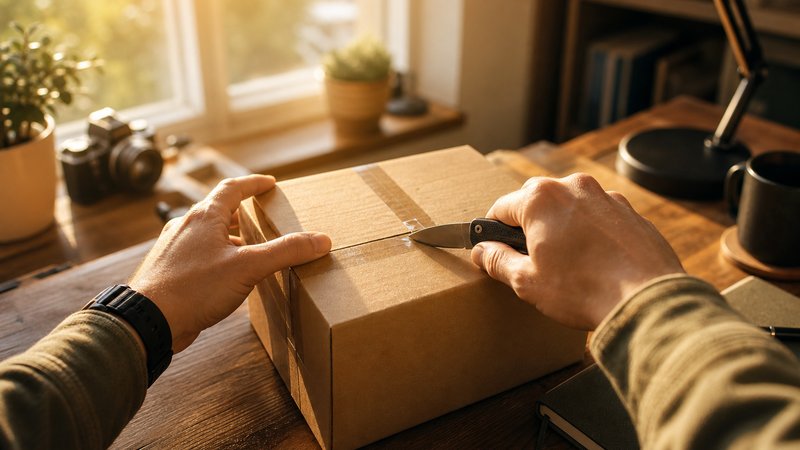
A slim card holder in the $18 to $35 range finishes the carry trio. The format holds 6 to 12 cards plus folded bills, and it moves the wallet to a front pocket.
The budget pick is any well-reviewed fabric or elastic card holder around $18. Brands like Flowfold and Herschel sell proven designs under $30, many with RFID-blocking liners. The metal card-clamp format works the same way at nearly every price. Two plates and an elastic band hold the cards, whether the wallet costs $17 or $95.
The Ridge wallet, at around $95, is the premium standard for that metal format, machined from aluminum or titanium. Nothing about a starter kit requires it. The Ridge product listings are still worth a look, because they define the design cheaper brands copy. Sizing, capacity, and the best picks per style live in the Man Talk minimalist wallets guide. The real win is behavioral: a slim wallet forces a card audit, and the back-pocket brick disappears. Sitting on a thick wallet all day is a habit worth breaking anyway.
The pen and the keychain: the cheap upgrades
A Zebra F-701 pen at around $10 and a tidy keychain complete the kit for under $25. Both fix daily annoyances that flashier gear ignores.
The F-701 is a stainless steel retractable ballpoint with a knurled grip and a fine point. The all-metal body survives pockets, toolboxes, and drops that crack plastic pens. A common owner upgrade swaps in a Fisher Space Pen pressurized refill for about $7. Per Fisher's published specifications, that refill writes upside down, on damp paper, and in freezing temperatures. Skip pens marketed as tactical striking tools; they write worse than the F-701 and cost more.
Keychain organization costs little and pays daily. A $15 to $25 key organizer folds keys into a pocketknife-style stack, which ends pocket jingle and scratched phone screens. A simpler fix costs under $10: one quality split ring plus a small bow-gate carabiner for a belt loop. Either way, the goal is the same. Keys stop shredding pocket linings, and the flashlight or a future keychain light gains a stable home.
Knife, multitool, or both?
Start with the knife alone. Add a multitool once real tasks demand pliers, drivers, or scissors, not before. The Gerber Dime at around $28 is the starter answer when that day comes.
| Daily task | Folding knife | Small multitool |
|---|---|---|
| Opening boxes and mail | Excellent | Adequate |
| Cutting cord, tape, zip ties | Excellent | Adequate |
| Gripping and pulling | No | Yes, spring pliers |
| Driving screws | No | Yes, flat drivers |
| Trimming threads and labels | Good | Yes, scissors |
| Added pocket weight | Under 3 ounces | About 2.2 ounces |
The Dime packs 12 tools into a 2.2-ounce frame, per Gerber's listing. The set includes spring-loaded pliers, scissors, a bottle opener, and a package-opening blade. Full-size multitools like the Leatherman Skeletool run $65 and up, and they earn it for trades work. For an office-and-errands life, the Dime covers the gaps the knife leaves.
Do you really need a multitool on day one?
No, and skipping it saves the most money in the build. A knife handles most daily cutting, which is most of what beginners actually use a multitool for. Community threads repeat the same pattern: the multitool rides in a bag, the knife rides in the pocket. Buy the Dime when a stripped screw or a stubborn bolt has already annoyed you twice. Buying tools for imagined emergencies is how junk drawers form.
Is a $30 knife actually good enough?
Yes, and the RAT series is the standard proof. AUS-8 is a mid-range steel, but geometry and heat treatment matter more at this size than the steel name. Premium steels like M390 mostly buy longer edge retention, at $150-plus prices and harder sharpening. A beginner learning to sharpen will thank the forgiving steel. The honest upgrade path is the Elementum at $50, not a $150 first knife.
The $75 loadout and the $150 loadout, line by line
The $75 loadout totals about $72: RAT 2, Archer Mini, an $18 card holder, and the F-701. The $150 loadout totals about $147 and upgrades the knife, wallet, and keychain while adding the Dime.
The $75 build is complete, not a stripped-down teaser. Every category daily life actually taxes is covered, and no item is a placeholder. The RAT 2 handles every cutting task a first month brings. The Archer Mini outperforms lights at triple its price. The card holder and F-701 finish the pockets. Skipping the multitool at this tier is deliberate, for the reasons above.
The extra $75 buys three upgrades and one addition. The Elementum swaps working-tool feel for genuine refinement, with D2 steel and bearing-smooth opening. The wallet budget rises to around $30, which buys metal plates or premium fabric and cleaner stitching. The key organizer replaces the jingling ring. The Dime joins as the only new category. The light and pen carry over unchanged, because neither has a meaningful upgrade under $50. That is the quiet lesson of the two builds: past a certain point, more money buys polish, not capability.
What beginners should skip
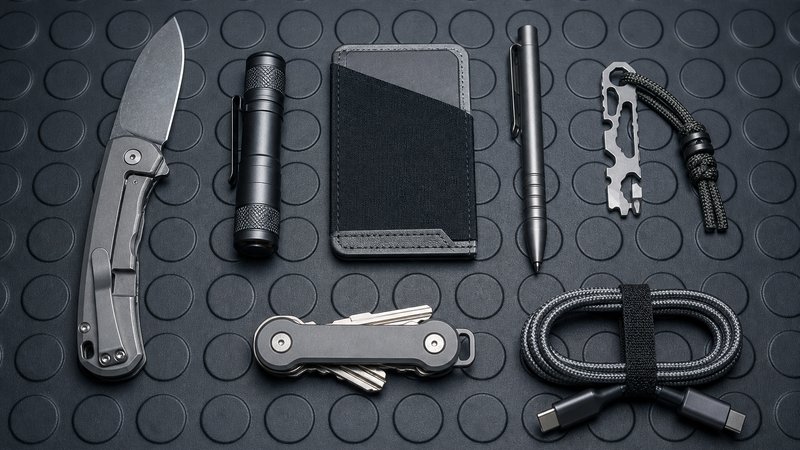
Five traps eat starter budgets: duplicate gear, tactical add-ons, premium steel, lumen chasing, and bundled kits. Every one of them costs money without adding daily use.
- Duplicate gear. One knife, one light, one wallet. Buying three $12 knives to find a favorite costs more than buying the RAT 2 once. Collections happen later, if they happen at all.
- Tactical add-ons. Glass breakers, strike bezels, and paracord grenades solve problems most days never bring. They add weight every day and value almost never.
- Premium steel too early. Knives in M390 or S90V start around $150 on their own. The performance gap only matters once sharpening skills and blade preferences exist.
- Lumen chasing. Pocket lights above 1,000 lumens mostly buy heat and rapid step-downs. Daily tasks need 50 to 300 lumens, a point the flashlight guide covers in detail.
- Bundled marketplace kits. Pre-built kits pair a no-name knife with a no-name light at a flattering price. Each piece fails the track-record test every pick here passes.
Which kit should you actually build?
Build the $75 loadout if any doubt exists, and the $150 loadout if daily carry is already certain. Both share the same flashlight and pen, so nothing is wasted by starting small.
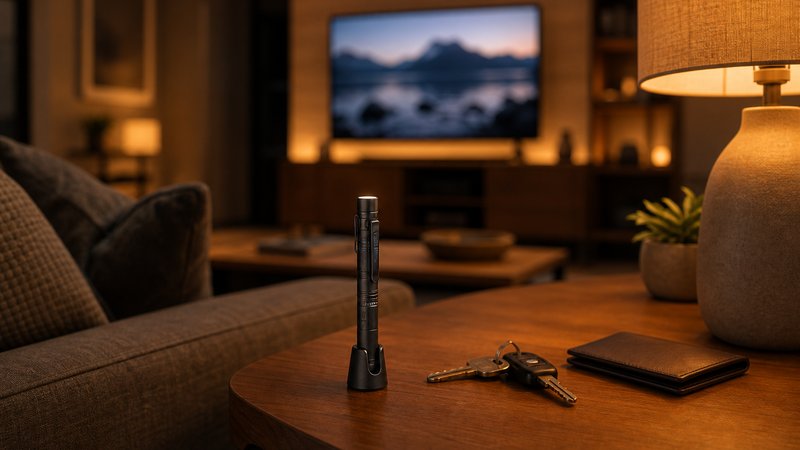
The standard carry pattern is worth copying from day one. The knife clips inside the dominant-hand front pocket, with the light beside it or on the keys. The wallet takes the other front pocket. That layout is the repeated advice across EDC communities, and it gives every item one fixed home. Gear with a fixed home gets carried; gear without one gets left on the dresser.
Budget honesty cuts both ways here. Nothing in either build is a consolation prize, and nothing in either build assumes an upgrade is coming. A $72 kit that gets carried every day beats a $400 kit that stays home. Carried daily without a second thought is the standard, and both builds meet it.
What should the first upgrade be?
The item that annoys you first. A weak clip, a dim low mode, or a loosening wallet band will announce itself within a month. Upgrading in response to a real complaint beats upgrading from a wish list. For most carriers the answer lands on the knife, because blade preferences only form through use. The $50 Elementum tier keeps most people satisfied for years. Upgrade one item at a time, and only after the cheap version has proven the habit sticks.
The EDC market moves fast, with new budget lights and knives landing every few months. The Man Talk EDC section tracks new carry gear and follow-up guides as they publish. The about page explains how recommendations get made here.
Frequently asked questions
What should go in a first EDC kit?
Four items cover nearly everything: a folding knife, a small rechargeable flashlight, a slim wallet, and a durable pen. That set handles opening, cutting, lighting, paying, and writing, which are the tasks daily life actually presents. A multitool, key organizer, and carry pouch are worthwhile later additions, not day-one requirements.
Is it legal to carry a pocket knife every day?
Usually, but the rules are local. Most states allow folding knives with blades around 3 inches, which covers the RAT 2 and Elementum. Cities, schools, courthouses, and airports set stricter limits. Check state law and city ordinances before carrying, and treat locking blades and one-hand opening as regulated features in some places.
How much should a beginner spend on a first EDC kit?
Between $75 and $150 covers a kit worth keeping. The $75 tier buys a proven knife, flashlight, wallet, and pen with no weak items. The $150 tier upgrades the knife and adds a multitool and key organizer. Spending more before habits form usually funds features that never leave a drawer.
Do minimalist wallets actually hold enough for daily use?
Yes, for most people. A typical card holder carries 6 to 12 cards plus a few folded bills, and average carry needs fall well inside that. The format forces a useful audit, since loyalty cards and old receipts stop riding along. Anyone who genuinely needs coins or many cards should keep a bifold.