Man Talk may earn a commission when you buy through links on this page. That never changes what gets recommended, and it never changes the price you pay.
Best Budget EDC Knives Under $60
The best budget EDC knife in 2026 is the Civivi Elementum, at around $50. It pairs a 2.96 inch D2 blade with smooth ceramic bearing action at a price most brands cannot match. The Ontario RAT 2, around $32, is the pick where blade length limits run tight. The Kershaw Iridium, around $60, brings a crossbar lock down to budget money. Every knife in this guide costs under $60, locks up solidly, and carries a steel worth sharpening. The differences show up in blade length, lock design, weight, and deployment. One thing matters before any of that: knife carry laws change by state and by city. A knife that is legal in one town can cause real trouble two counties over. This guide covers the legal basics first, then compares eight knives on specs, steel, and daily practicality. The comparisons rest on published specifications and documented owner consensus, not marketing copy. Approximate street prices are used throughout, since knife prices drift from week to week. By the end you will know which blade fits your pocket, your local rules, and your budget.
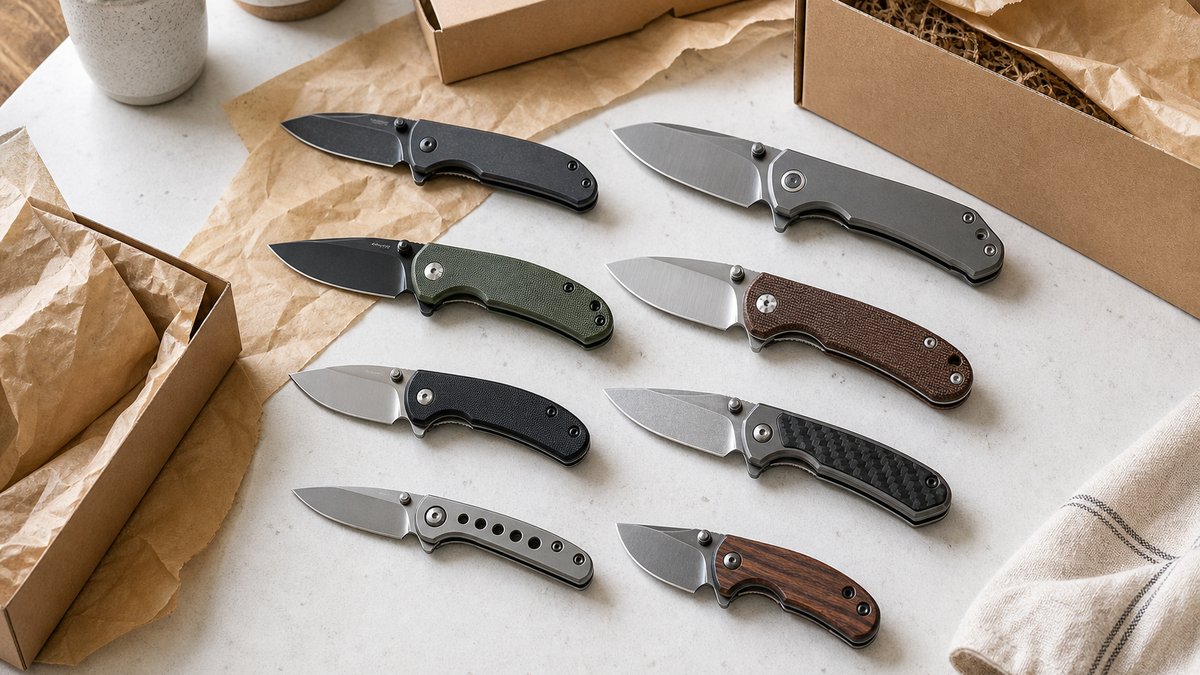
The picks at a glance
Eight budget EDC knives stand out in 2026, all under $60. They are the Civivi Elementum, Ontario RAT 1 and RAT 2, Kershaw Iridium, CJRB Pyrite, Sencut Sachse, Kizer Drop Bear, and Opinel No. 8. Each one wins a specific use case rather than an overall crown.
| Knife | Typical price | Best for | Blade | Steel | Lock |
|---|---|---|---|---|---|
| Civivi Elementum | ~$50 | All-around benchmark | 2.96" | D2 | Liner |
| Ontario RAT 1 | ~$33 | Hard daily work | 3.6" | AUS-8 | Liner |
| Ontario RAT 2 | ~$32 | Tight length limits | 3.0" | AUS-8 | Liner |
| Kershaw Iridium | ~$60 | Best action | ~3.4" | D2 | Crossbar |
| CJRB Pyrite | ~$42 | Cheapest crossbar | 3.11" | AR-RPM9 | Crossbar |
| Sencut Sachse | ~$45 | Most blade per dollar | 3.47" | 9Cr18MoV | Button |
| Kizer Drop Bear | ~$55 | Compact premium steel | 2.99" | 154CM | Crossbar |
| Opinel No. 8 | ~$20 | Lightest and cheapest | 3.35" | 12C27 | Collar |
Prices drift constantly at this end of the market, sometimes by $10 in a week. Treat the numbers above as typical street prices, not guarantees. Sales at the big knife retailers push several of these below their usual marks. Man Talk staff spent years living in Alaska and the mountains, where carry gear gets used, not displayed.
Check your local knife laws before you carry
Knife law in the United States is set state by state, and cities often add their own rules. Blade length caps, locking-blade restrictions, and concealed-carry definitions all change across those lines. Check current local law before carrying any knife in this guide. Nothing here is legal advice.
Blade length is the most common restriction. Published state summaries show limits ranging from 2.5 inches in restrictive cities such as Chicago to no general limit in Arizona. Most states that set a cap land between three and five inches. A folding blade under three inches is legal to carry across the large majority of American jurisdictions. That is a big part of why the three-inch RAT 2 and the 2.99 inch Drop Bear exist.
Lock rules and knife types are the second layer. A locking folder is an ordinary tool in most of the United States. Some jurisdictions abroad treat locking blades far more strictly, which matters before any travel. Automatic knives sit under separate rules entirely. The federal Switchblade Act of 1958 restricts their interstate sale, and roughly 40 states now allow adults to own them. None of the knives in this guide are automatics.
Concealment is the third variable, and the definitions get slippery. Some statutes count a clipped knife riding inside a pocket as concealed. Others treat the visible clip as open carry. Courts have read near-identical wording differently, so the statute text alone does not settle it. Location restrictions stack on top of everything above. Schools, courthouses, federal buildings, and airport security lines prohibit blades regardless of state law. TSA allows no knives of any kind in carry-on bags.
Preemption decides whether the state rulebook is the only rulebook. Some states block cities and counties from writing their own knife ordinances. Others let local governments add restrictions, which is how a knife can be legal at home and illegal downtown. Reading the state statute and the local municipal code takes ten minutes. Do it before the knife rides in a pocket, and again after any move. This section is general information only, not legal advice, and laws change often.
Does a pocket clip count as concealed carry?
Sometimes, and the answer changes by jurisdiction. Some statutes treat any blade out of plain view as concealed, clip or not. Others accept a visible clip as open carry. Published state law summaries and local police guidance are the practical starting points. When the wording is unclear, the cautious reading is the safer one.
How these picks were chosen
Every pick had to pass four tests: a price under $60, a real lock, a steel worth maintaining, and a track record in owner communities. Man Talk built this list from published specifications and community consensus, not from paid placements.
The budget knife market is crowded with near-identical designs, and plenty of roundups recycle spec sheets. Owner communities such as BladeForums and the knife subreddits catch what specs miss. That means gritty pivots, weak detents, and locks that develop play after a month. Where owner consensus disagrees with marketing, this guide sides with the owners. No first-person testing claims appear here. When a claim needs a source, it comes from published specs and documented owner reports.
Civivi Elementum: the benchmark (~$50)
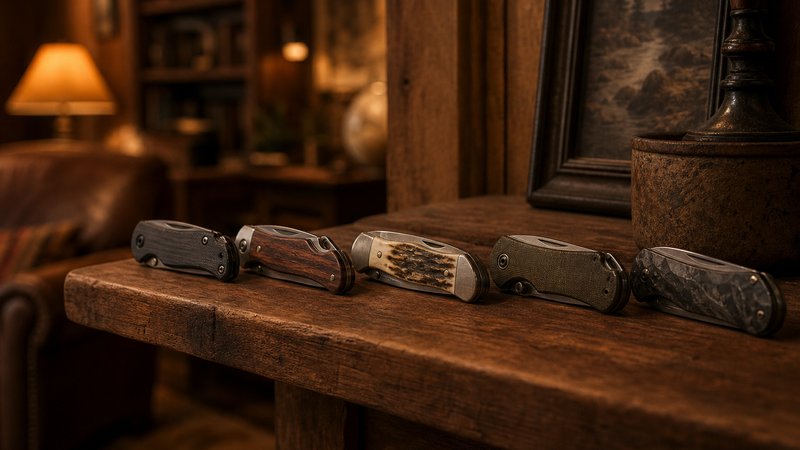
The Civivi Elementum is the default recommendation for a first quality knife. It pairs a 2.96 inch D2 drop point with a caged ceramic bearing pivot and a liner lock, at around $50.
Civivi launched in 2018 as the budget arm of a high-end Chinese maker, and the Elementum became its calling card. The published spec lists the D2 blade hardened to 59 to 61 HRC, which is respectable at any price. The flipper action on ceramic bearings is the reason this knife gets recommended so often. It fires hard and drops shut freely, which budget knives rarely managed before it arrived.
Trade-offs exist. D2 stains if neglected, and the blade sits close to the three-inch caps some cities enforce. Handle options run from G10 to micarta and wood, all near the same price. At just under three ounces it carries lightly for its size. For most buyers, this is the knife the rest of the list gets judged against.
Ontario RAT 1 and RAT 2: the workhorses (~$30 to $45)
The Ontario RAT 1 and RAT 2 are the longest-serving budget recommendations in the hobby. The RAT 1 carries a 3.6 inch blade for bigger jobs. The RAT 2 shrinks the same design to a three-inch blade for stricter jurisdictions and lighter pockets.
Both knives came out of a design partnership with Randall's Adventure Training, the survival school behind the RAT name. Base models use AUS-8 steel at around $30 to $35, with D2 versions a step up in price. AUS-8 gives up edge retention to D2 but sharpens fast and takes a keen edge. The liner lock, thumb studs, and nylon handles are plain, proven, and easy to live with.
Size is the real decision between them. The RAT 1 weighs around five ounces, which is heavy by 2026 standards. The RAT 2 drops to roughly 2.8 ounces and rides in slacks without sagging. Neither is glamorous. Both are the kind of knife owners keep for a decade, which the two-decade sales record backs up.
Kershaw Iridium: the budget crossbar (~$60)
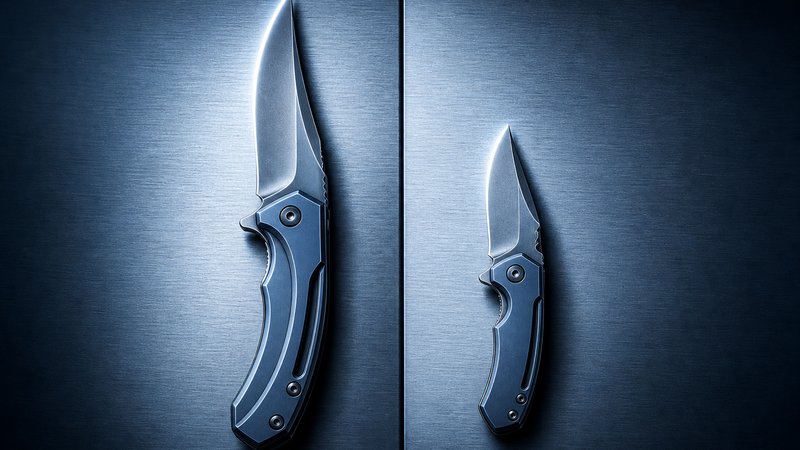
The Kershaw Iridium brings a crossbar lock, contoured aluminum handles, and a D2 spear point blade for around $60. Published reviews consistently rank its action among the best in the class.
The crossbar lock is the draw. It works from either hand, keeps fingers out of the blade path when closing, and invites constant fidgeting. Knife Informer's published review rates the action as good as crossbar locks on knives costing far more. The blade runs about 3.4 inches, with a published weight near 3.4 ounces. Hidden bearings keep pocket lint out of the pivot.
The D2 steel is the main compromise, since a few rivals offer 14C28N at similar money. Reviewers also note the recessed clip cutout looks odd on the show side. Neither gripe changes the verdict. For anyone who wants the crossbar feel without spending triple digits, this is the pick.
CJRB Pyrite: the fidget bargain (~$42)
The CJRB Pyrite packs a crossbar lock and a 3.11 inch blade in house AR-RPM9 steel for around $40. It is the cheapest smooth crossbar action on this list.
CJRB is the budget line of Artisan Cutlery, and AR-RPM9 is its in-house powder metallurgy stainless. Powder processing gives the steel a fine, even grain. Owners report edge retention near mid-tier steels with quicker sharpening, and the brand's own literature positions it against 9Cr-class steels. The Pyrite comes in stainless-handle and G10 versions with several blade shapes.
Weight is the compromise. The stainless-handled versions carry heavier than the class average, and the styling is plain. None of that touches the value. Community reviews repeatedly name the Pyrite as the knife that turned crossbar locks into a budget feature.
Sencut Sachse: the big blade (~$45)
The Sencut Sachse offers the most blade on this list. Around $45 buys a 3.47 inch drop point in 9Cr18MoV steel with a button lock, flipper tab, and bearing pivot.
Sencut sits below Civivi in the same corporate family, and the Sachse is its standout. 9Cr18MoV is a high-chromium Chinese stainless that resists rust well and sharpens quickly, though its edge fades faster than D2. The button lock releases the blade without putting fingers near the edge. Owner reports describe the action as matching knives well above its price.
Mind the legal section with this one. A 3.47 inch blade crosses the three-inch caps some cities enforce, so it suits permissive areas best. Where length rules allow it, the Sachse delivers the longest edge per dollar in this guide.
Kizer Drop Bear: the compact crossbar (~$55)
The Kizer Drop Bear fits a crossbar-style Clutch Lock and American 154CM steel into a 2.99 inch package at around $55. It is the smallest knife here wearing a premium steel.
154CM is the step up. The American-made stainless holds an edge longer than D2 in most published testing while resisting rust better. Published specs list a 2.99 inch blade, a 7.15 inch overall length, and 3.68 ounces. That sub-three-inch blade clears more legal caps than anything else here except the RAT 2.
The weight runs a touch high for the size, thanks to solid construction. Owner reports note the grip suits medium hands better than large ones. As a city-friendly knife that gives up nothing in steel quality, it is an easy recommendation.
Opinel No. 8: the hundred-year answer (~$20)
The Opinel No. 8 is the cheapest knife in this guide and the oldest design by a wide margin. Around $20 buys a 3.35 inch Sandvik stainless blade, a beechwood handle, and the Virobloc collar lock.
Opinel has made knives in France since 1890, and the Virobloc locking collar arrived in 1955. Twist the steel collar and the open blade cannot fold. The Sandvik 12C27 stainless takes a fine edge and touches up in seconds on any stone. At roughly 1.6 ounces, the No. 8 disappears in a pocket or a picnic bag.
The limits are obvious. There is no clip, no one-hand opening, and the wood handle swells when it gets soaked. None of that has slowed more than a century of continuous production. As a beater, a food knife, or a first knife, nothing under $60 offers a better story per dollar.
Budget knife steels explained
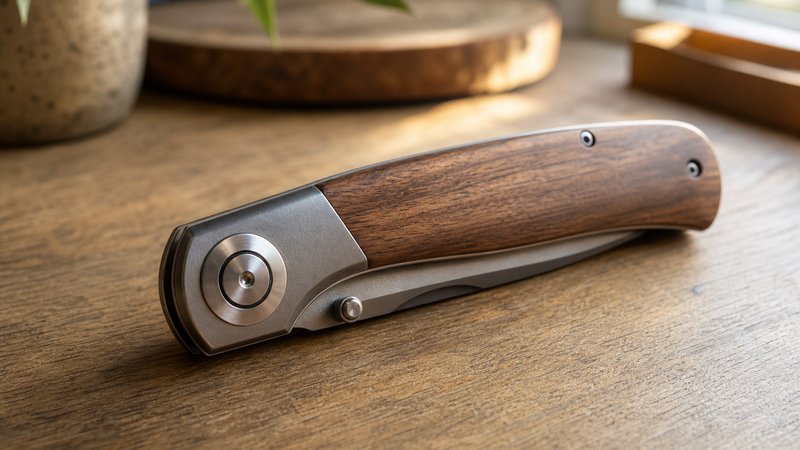
Four steels dominate the under-$60 class: D2, 14C28N, 9Cr18MoV, and 154CM, with house steels such as AR-RPM9 alongside them. Each trades edge retention, rust resistance, and sharpening effort differently. No single steel wins all three.
| Steel | Edge retention | Rust resistance | Sharpening | Found on |
|---|---|---|---|---|
| D2 | Good | Fair (semi-stainless) | Slower | Elementum, Iridium, RAT D2 versions |
| 14C28N | Good | Very good | Easy | Kershaw Skyline, many Civivi models |
| 9Cr18MoV | Fair | Very good | Easy | Sencut Sachse |
| AUS-8 | Fair | Good | Very easy | RAT 1, RAT 2 |
| 154CM | Very good | Good | Moderate | Kizer Drop Bear |
| AR-RPM9 | Good | Very good | Easy | CJRB Pyrite |
| 12C27 | Fair | Very good | Very easy | Opinel No. 8 |
Two facts anchor that table. D2 began as an industrial tool-and-die steel, and its chromium content sits just below the stainless threshold, which is why it can stain. Sandvik developed 14C28N together with Kershaw specifically for knife blades, and it remains the budget favorite for easy care. The rest of the field lands somewhere between those two philosophies.
Which steel should a first-time buyer pick?
Whichever one actually gets maintained. A neglected premium steel cuts worse than a maintained cheap one. Buyers who enjoy sharpening lean toward D2 or 154CM for the longer edge life. Buyers who want to forget about rust lean toward 14C28N, 9Cr18MoV, or 12C27. At this price, the design and the lock matter more than the steel stamp.
Lock types and deployment, explained
Three lock families cover this list: liner locks, crossbar locks, and outliers like the button lock and Opinel's collar. Deployment splits between flipper tabs and thumb studs. Those two choices shape daily use more than most spec sheet numbers.
The modern liner lock traces to knifemaker Michael Walker in the early 1980s, and it remains the budget default. It is simple and cheap to execute well, though closing one puts a finger in the blade path. The crossbar lock reshaped the market after Benchmade's Axis patent expired in 2016. It is spring-loaded, works from either side, and closes without a finger near the edge. That is why the Iridium, Pyrite, and Drop Bear all run a version of it.
Button locks such as the Sachse's press a plunger instead of pulling a bar, and feel similar in use. Opinel's twisting collar is slower but nearly foolproof. On deployment, flipper tabs fire the blade with an index finger pull and feel fastest. Thumb studs open at any speed the situation calls for. The RAT twins use studs, the Elementum and Sachse use flippers, and the Iridium pairs studs with bearing-smooth speed.
Flipper or thumb stud: which is better for daily carry?
Flipper tabs win on speed and fidget appeal, while thumb studs win on control. Neither is wrong. A flipper depends on a tuned detent to fire cleanly, something budget brands now handle well. Thumb studs allow a slow, quiet opening, which reads better in public settings and around coworkers.
What to check before buying any budget knife
Five checks separate a good purchase from a returned one: legal fit, blade steel, lock comfort, carry weight, and seller reputation. Run all five before spending anything.
- Legal fit. Confirm blade length and lock rules for the state and the city. The three-inch RAT 2 and 2.99 inch Drop Bear clear the most caps.
- Blade steel. Match the steel to your maintenance appetite using the table above. Anyone who hates oiling metal should skip D2.
- Lock comfort. Crossbar and button locks close without a finger in the blade path. Liner locks demand slightly more attention every single time.
- Carry weight. Anything under three ounces disappears in a pocket. The five-ounce RAT 1 announces itself all day long.
- Seller reputation. Clones of popular budget knives flood marketplace listings. Buy from established knife retailers and read reviews from recent weeks, not past years.
A knife rarely carries alone. The Man Talk guides to the best EDC flashlights under $50 and the complete EDC starter kit under $150 cover the rest of the pocket. Budgeting the whole loadout together usually beats overspending on any single piece.
Which knife should you actually buy?
Buy the Civivi Elementum if only one knife is getting bought. Buy the RAT 2 or Drop Bear where blade caps run tight. Buy the Iridium for the best action, the Pyrite or Sachse to save money, and the Opinel No. 8 as a first knife or beater.
A simpler way to decide: start from the local law, then the budget, then taste. The legal check removes options fast in strict cities, and no knife is worth a citation. After that, the Elementum and Iridium reward buyers who care about feel. The RAT twins reward buyers who care about plain, hard work. Current specs and prices for every model here are published at major retailers such as KnifeCenter. The Man Talk EDC section tracks new budget gear as it lands, and the about page explains how recommendations get made here.
Frequently asked questions
What blade length is legal to carry in most states?
There is no single national rule. Many states allow folding knives with blades under three inches almost everywhere, while others set limits at three and a half, four, or five inches. Cities can add stricter caps, such as Chicago at two and a half inches. Always confirm current local law.
Is D2 steel good enough for everyday carry?
Yes, at this price it is a strong choice. D2 holds an edge longer than most budget stainless steels because of its high carbon content. The trade-offs are slower sharpening and less rust resistance, since D2 falls just short of stainless. A quick wipe-down after wet work keeps it fine.
Are budget knives from Chinese brands reliable?
Generally yes. Civivi, Sencut, CJRB, and Kizer run modern CNC production lines, and their fit and finish routinely beats older American budget lines. Community reviews back this up across thousands of owner reports. The practical risks are clones and fakes on marketplace sites, so buy from established knife retailers.
How often does a budget EDC knife need sharpening?
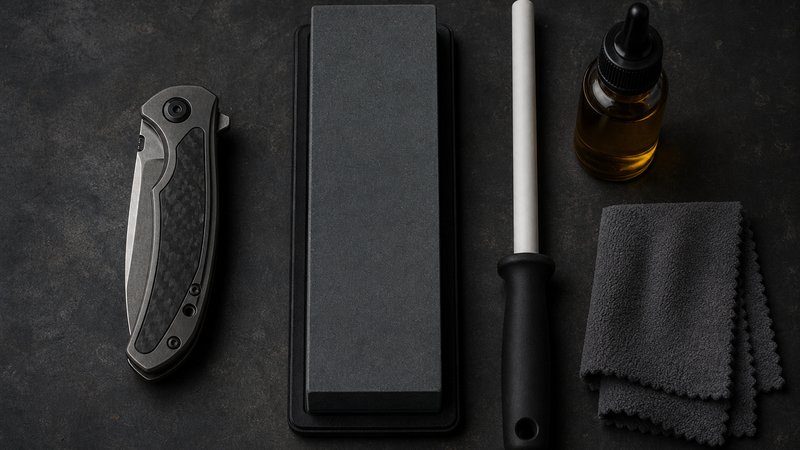
For light daily tasks, a touch-up every few weeks keeps any steel in this guide working well. D2 and 154CM go longer between sessions, while 9Cr18MoV and AUS-8 need more frequent attention. A ceramic rod or basic guided sharpener under $20 handles all of them at home.