Man Talk may earn a commission when you buy through links on this page. That never changes what gets recommended, and it never changes the price you pay.
Best Minimalist Wallets for Men
The best minimalist wallet for men in 2026 is the Ridge Wallet, at around $95 in aluminum. The Ekster Parliament, around $99, is the pick for one-handed card access. The Bellroy Slim Sleeve, around $79, is the pick for anyone who prefers leather over metal. Every wallet in this guide holds at least ten cards while staying far slimmer than a traditional bifold. The real differences show up in cash handling, materials, warranty coverage, and how fast the right card reaches your fingers. Cash is the trap that catches most first-time buyers, because slim wallets treat paper money as an afterthought. This guide compares six wallets plus the budget clone tier on all of those points. The comparisons rest on published specifications and the documented consensus of the EDC community, not marketing copy. It also gives an honest answer on RFID blocking, a feature that matters far less than the ads suggest. By the end you will know which wallet fits your cards, your cash habits, and your budget. You will also know which trade-offs are livable and which ones send wallets to a drawer.
The picks at a glance
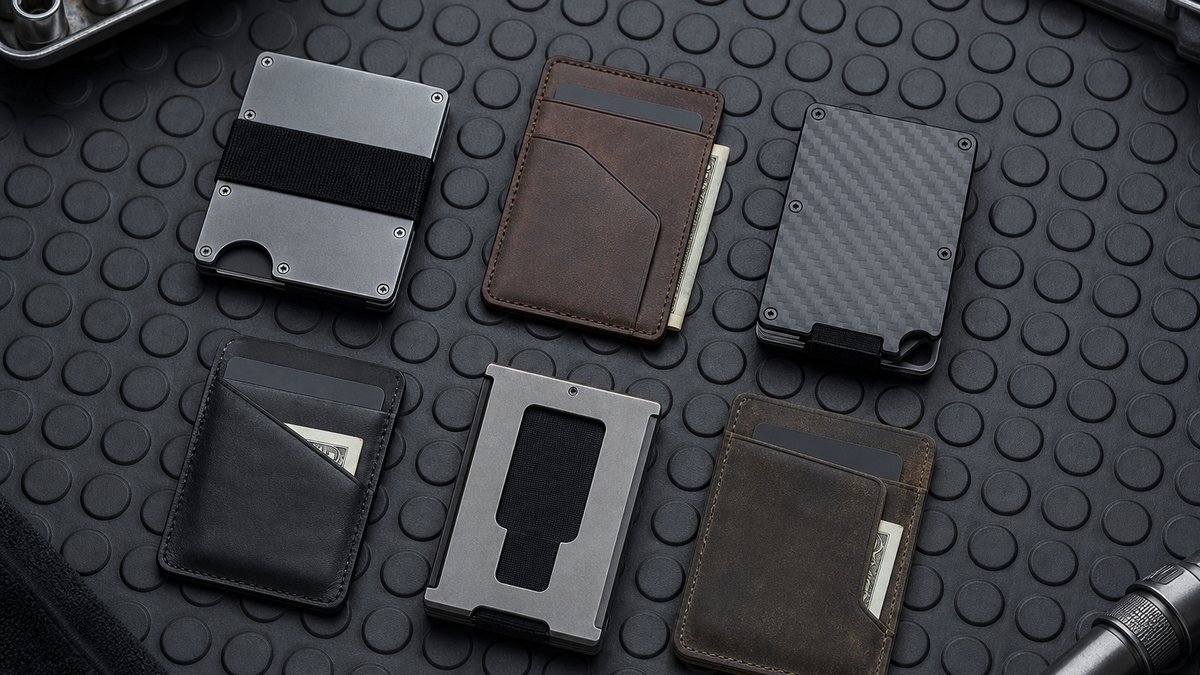
Six minimalist wallets stand out for men in 2026: the Ridge Wallet, Ekster Parliament, Ekster Cardholder Pro, Bellroy Slim Sleeve, Trayvax Element, and Fantom X. Each wins a specific use case rather than an overall crown, and a clone tier under $30 covers trial runs.
| Wallet | Typical price | Best for | Capacity | Warranty |
|---|---|---|---|---|
| Ridge Wallet | ~$95 (aluminum) | Overall pick | 1 to 12 cards | Lifetime |
| Ekster Parliament | ~$99 | Fastest card access | Up to ~10 cards | Lifetime |
| Ekster Cardholder Pro | ~$119 | Metal plus capacity | 1 to 14 cards | Lifetime |
| Bellroy Slim Sleeve | ~$79 | Leather feel | 5 to 11 cards | 3 years |
| Trayvax Element | ~$85 | Rough duty | Up to 14 cards | 65-year heirloom |
| Fantom X | ~$139 | Fan-out access | 4 to 13 cards | Limited lifetime |
Prices shift with sales and material choices, sometimes by $20 or more. Treat the numbers above as typical direct-from-brand prices, not guarantees.
How these picks were chosen
Every pick had to pass four tests. The tests: honest everyday capacity, a workable cash answer, real warranty coverage, and documented owner consensus. Man Talk built this list from published specifications and the collective judgment of the EDC community, not from paid placements.
That last point matters in this category. Wallet marketing leans hard on lifestyle photography and thickness claims measured with no cards inside. Community reviews catch what the ads skip: elastic that loosens, mechanisms that jam on worn cards, and leather that stretches out of shape. Where owner consensus disagrees with the marketing, this guide sides with the owners. Man Talk staff spent years living in Alaska and the mountains, where carry gear gets used, not displayed. No first-person testing claims are made here; when a claim needs a source, it comes from documented owner reports and published specifications. The market is also old enough to judge fairly. Ridge launched on Kickstarter back in 2013, so the failure patterns of every design are now well documented.
Ridge Wallet: the metal benchmark (~$95)
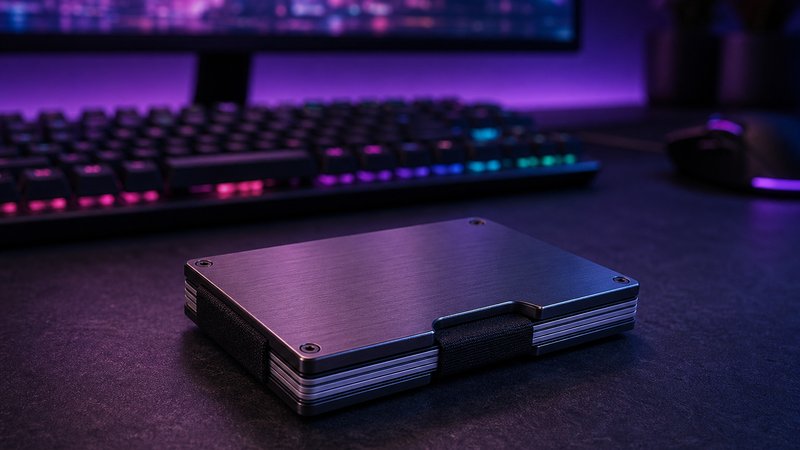
The Ridge Wallet is the default pick for most men moving to a minimalist wallet. Two metal plates and an elastic track hold 1 to 12 cards, with a cash strap or money clip on the back. Aluminum runs about $95, titanium about $125, and carbon fiber about $150.
The aluminum models use 6061-T6, the same alloy grade found in aircraft fittings and bicycle frames. Cards push up through a thumb notch and fan slightly for retrieval. The design has barely changed since the 2013 Kickstarter campaign, which says something about how right it was the first time. RFID blocking comes free with the construction, since a metal shell blocks radio signals on its own.
The lifetime warranty covers the wallet itself, and Ridge sells replacement elastic and screw kits for a few dollars. That repairability is the quiet argument for the price. The trade-offs are real: bills must fold in thirds under the strap, and hard metal edges show wear in tight pockets. Current models, materials, and pricing are listed at Ridge's official site.
Ekster Parliament and Cardholder Pro: the quick-draw picks (~$99 to $119)
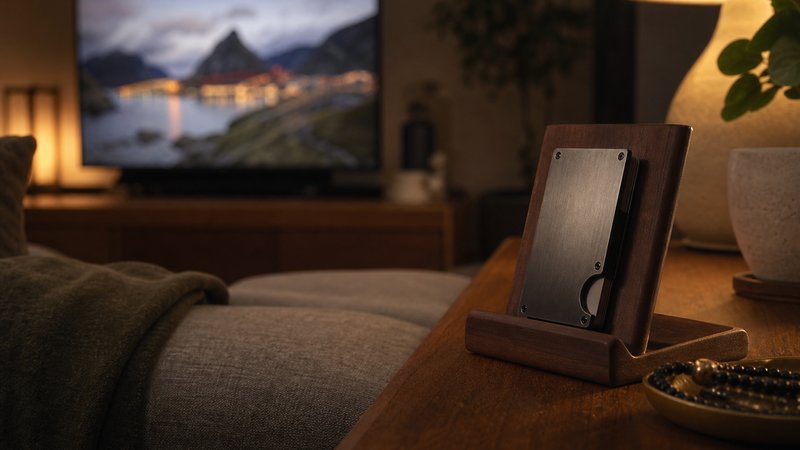
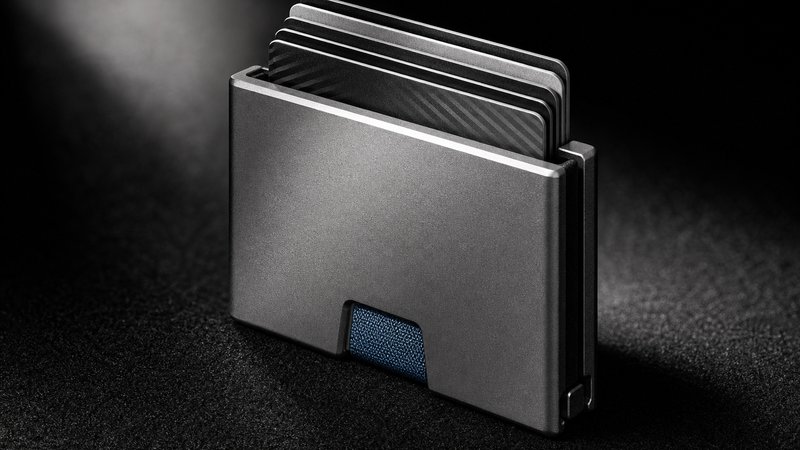
Ekster wallets are built around speed. The Parliament, around $99, wraps a leather shell over an aluminum card chamber. Squeeze the trigger and up to six cards fan out in a stepped stack. The all-metal Cardholder Pro, around $119, raises total capacity to as many as 14 cards.
The pop-up chamber holds the daily cards, and the rest ride under an exterior strap or in a back pocket with folded bills. Ekster also sells a rechargeable tracker card that slides into any of its wallets. Lose the wallet and your phone can ring it or pull up its last known location. The tracker is sold separately, so treat listed wallet prices as the base cost.
Trade-offs exist here too. The mechanism adds structure, so the Parliament never gets as thin as a bare leather sleeve. Cards with worn or rough edges can drag inside the chamber, a repeated note in owner threads. Ekster covers the Cardholder Pro with a lifetime warranty, which matches Ridge on paper.
Bellroy Slim Sleeve: the leather pick (~$79)
The Bellroy Slim Sleeve is the leather answer, at around $79. It holds 5 to 11 cards plus folded bills and stays remarkably thin when lightly loaded. It suits anyone who finds metal wallets cold, hard-edged, or too gadget-like.
Bellroy is an Australian company, named for Bells Beach and the Melbourne suburb of Fitzroy. It is a certified B Corp, and its leather comes from tanneries rated gold by the Leather Working Group. The Slim Sleeve carries a three-year warranty, the shortest coverage in this guide. Leather simply cannot promise what machined metal can.
Two quick-access slots hold the daily pair of cards, and a hidden pocket takes the rest. Bills fold twice to fit inside. Leather stretches to match its load over months, so an overstuffed first week leaves a loose wallet later. Most Bellroy leather models also skip RFID shielding, which matters far less than it sounds. The RFID section below explains why.
Trayvax Element: the overbuilt pick (~$85)
The Trayvax Element is the pick for rough duty. A stainless steel frame pairs with oil-tanned leather, holds up to 14 cards, and carries bills under an integrated clip. It costs around $85 and is built in Ferndale, Washington.
Trayvax backs it with a 65-year heirloom warranty, the longest stated coverage in this guide. The construction invites abuse: job sites, boats, tool bags, tailgates. Owner reports describe the leather darkening and scarring into a patina rather than wearing out. The steel frame shrugs off drops that would gouge an aluminum wallet.
The cost is bulk and speed. The Element is the heaviest wallet here, and cards slide out from behind a leather flap rather than popping to hand. Anyone who buys it wants durability first and slimness second. As a work wallet or a truck wallet, nothing else in this guide matches it.
Fantom: the fan-out alternative (~$55 to $139)
Fantom wallets solve card access differently. Slide the lever and every card fans out sideways like a hand of playing cards, each one visible and grabbable. The aluminum Fantom S starts around $55, and the flagship Fantom X starts around $139 and holds up to 13 cards.
The fan layout is the reason to pay attention. Pop-up wallets raise a stepped stack, but a fan shows every card label at once. That ends the shuffle of pulling three cards to find the fourth. Fantom also sells a MagSafe version, the Fantom M, that snaps to the back of an iPhone.
The warranty structure is unusual and spelled out on the company's policy page. A limited lifetime warranty covers defects, and damage from wear, misuse, or neglect qualifies for a replacement at half of retail price. The trade-offs: the body runs wider than a Ridge, and cash needs an optional clip accessory.
Budget minimalist wallets under $30
Ridge-style aluminum clones sell for $15 to $25 and work fine on day one. What they give up is longevity: no warranty, no replacement parts, unnamed alloys, and elastic that fatigues within months. A clone makes the most sense as a trial run before spending real money.
The failure pattern in owner reports is consistent. The plates survive, but the elastic loosens until cards start sliding out in a pocket. Name-brand wallets specify their materials, and 6061 aluminum has published strength numbers that a mystery alloy does not. Warranty support is the other gap, since marketplace sellers churn too quickly to honor claims two years later.
A clone still answers one question cheaply: does the rigid-plate format suit your carry at all? Some people love the hard rectangle, and some go back to leather within a week. Spending $20 to find out beats spending $95. Anyone building a first carry setup on a budget should read the EDC starter loadout under $150. That guide treats the wallet as one piece of a larger kit.
Does RFID blocking actually matter?
Mostly no, and the honest version of this answer is rare in wallet marketing. Documented cases of criminals wirelessly skimming cards from strangers' pockets are close to zero. Modern contactless cards defend themselves, and every metal wallet in this guide blocks signals anyway as a side effect of construction.
The technical reason is one-time codes. Contactless cards built on the EMV standard generate a unique cryptographic code for every single transaction. A skimmed code cannot be replayed for further purchases, which makes wireless skimming poor business for a criminal. Actual card fraud flows through gas pump skimmers, phishing, and database breaches, none of which any wallet prevents. Consumer protection groups and security researchers have been saying this for years.
So why does every wallet still advertise RFID blocking?
Because the feature costs almost nothing to add and shoppers search for it. A thin foil layer inside a leather wallet satisfies the checkbox. Treat RFID blocking as neutral: no reason to avoid it, and no reason to pay extra for it. A leather wallet without shielding, like most Bellroy models, is not a meaningful risk. Skipping a wallet you otherwise like over a missing RFID label would be a mistake.
How slim wallets handle cash
Slim wallets handle cash three ways: an elastic strap, a metal money clip, or a bill section inside the sleeve. None of the three matches a bifold for cash comfort. The right choice depends on whether cash is a daily tool or an emergency backup.
| System | Found on | How bills carry | Weak point |
|---|---|---|---|
| Elastic strap | Ridge, Ekster | Folded in thirds, outside | Strap relaxes over years; slower access |
| Money clip | Ridge (option), Trayvax, Fantom (accessory) | Folded once, clamped flat | Thin stacks sit loose; magnet near stripe cards |
| Bill sleeve | Bellroy Slim Sleeve | Folded twice, inside | Thickness grows with the stack |
The geometry explains the compromise. A United States bill measures 6.14 by 2.61 inches, so a fold in thirds leaves a packet just over two inches wide. That packet hides neatly behind a card stack but takes two hands to open flat. Heavy cash users feel that friction every day, and light cash users never notice it.
Do you still need to carry cash at all?
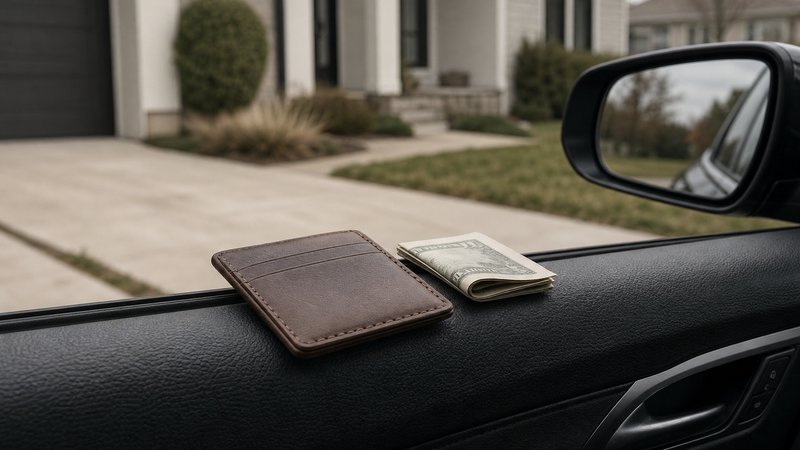
Yes, in small amounts. Tips, cash-only food counters, parking meters, and payment outages still happen. The practical habit is three to five folded bills refreshed weekly, which every wallet in this guide manages without complaint. Anyone who handles cash daily should accept a slightly thicker wallet with a real bill section rather than fight a strap. That points to the Bellroy, or honestly to keeping a traditional wallet.
What to check before you buy
Five checks separate a wallet that lasts from a returned one: an honest card count, the cash system, pocket profile, warranty terms, and repairability.
- Honest card count. Count the cards used in a normal week, then add two. Ignore maximum capacity claims, because every wallet handles its stated max worse than its middle.
- Cash system. Match the strap, clip, or sleeve to actual habits. A daily cash user with a strap wallet ends up annoyed at every register.
- Pocket profile. Metal rectangles print through slim pants and can wear holes over time. Leather softens against the body. Front-pocket carry favors rounded edges and lighter weight.
- Warranty terms. Lifetime coverage from Ridge, Ekster, and Fantom, 65 years from Trayvax, three years from Bellroy, and nothing from the clones. Warranty length tracks how long the maker expects the wallet to live.
- Repairability. Replacement elastic and screws keep a Ridge running for decades. A wallet that can be serviced outlives one that must be replaced whole.
Which wallet should you actually buy?
Buy the Ridge Wallet if unsure, or the Ekster Parliament for the fastest card access. Buy the Bellroy Slim Sleeve for leather, the Trayvax Element for rough work, and the Fantom X for the fan mechanism. Start with a $20 clone if the format itself is still the question.
A simpler way to decide: empty the current wallet and sort everything into daily, weekly, and never piles. Daily cards go in the new wallet. Weekly cards can ride in a phone case, a desk drawer, or the car console. The never pile explains why the old bifold hit two inches thick. Most men finish this exercise holding five or six cards, which every pick here carries with room to spare.
What if you carry more than 12 cards?
Carry fewer. Loyalty cards digitize into store apps and phone wallets, and insurance cards photograph well. The card count that feels essential usually is not, which switchers discover within the first week. A true fifteen-card daily carry belongs in a larger leather wallet, and no pick in this guide will feel right. Forcing it just produces an overstuffed brick with none of the slim benefits.
A wallet is usually the first upgrade in a carry kit, and the rest follows the same buy-once logic. The Man Talk EDC section collects those guides, including the roundup of the best EDC flashlights under $50. The about page explains how recommendations get made here.
Frequently asked questions
Do you really need RFID blocking in a wallet?
No, for most people. Contactless cards generate a one-time code for each transaction, so intercepted data has little reuse value. Documented cases of real-world wireless skimming are close to zero. Metal wallets like the Ridge block signals anyway as a side effect, so paying extra for the feature makes no sense.
How many cards should a minimalist wallet hold?
Most people carry four to six cards daily, and every wallet in this guide holds at least ten. Capacity claims describe the maximum, not the comfortable load. A Ridge stuffed with twelve cards gets stiff, and a Bellroy stretched to eleven loses its slim profile. Count your actual daily cards before choosing.
Will a metal wallet damage hotel key cards or IDs?
The metal itself does no harm, since cards sit in a shielded stack. The risk comes from magnetic money clips on some models, which can weaken old-style magnetic stripe key cards. Chip and contactless cards are unaffected. Keeping hotel keys away from the clip side avoids the problem entirely.
Is a $20 minimalist wallet as good as a Ridge?
Functionally close on day one, but the gap opens with time. Budget clones use unnamed alloys and weaker elastic, and offer no warranty or replacement parts. The Ridge costs more up front and includes a lifetime warranty plus replaceable elastic. A clone works well as a low-cost trial of the format.