Man Talk may earn a commission when you buy through links on this page. That never changes what gets recommended, and it never changes the price you pay.
Best Sim Racing Pedals Under $200
The best sim racing pedals under $200 in 2026 are the Moza SR-P for anyone running a Moza wheelbase. The Thrustmaster T-LCM, priced near the $200 cap, is the pick for console drivers. Fanatec's CSL Pedals with the Load Cell Kit, around $200 combined, suit racers already on a Fanatec base. All three share the feature that matters: a load cell brake that measures pressure instead of pedal travel. That single change does more for lap times than any wheel upgrade at similar money. Braking is where sim racers gain or lose the most time, and pressure-based braking builds real muscle memory. This guide compares the leading load cell sets under $200, plus the cheaper travel-based sets worth using as a starting point. The comparisons rest on published specifications and the documented consensus of the sim racing community, not marketing copy. By the end you will know which set fits your wheelbase, your platform, and your mounting situation. You will also know which upgrades to skip until later.
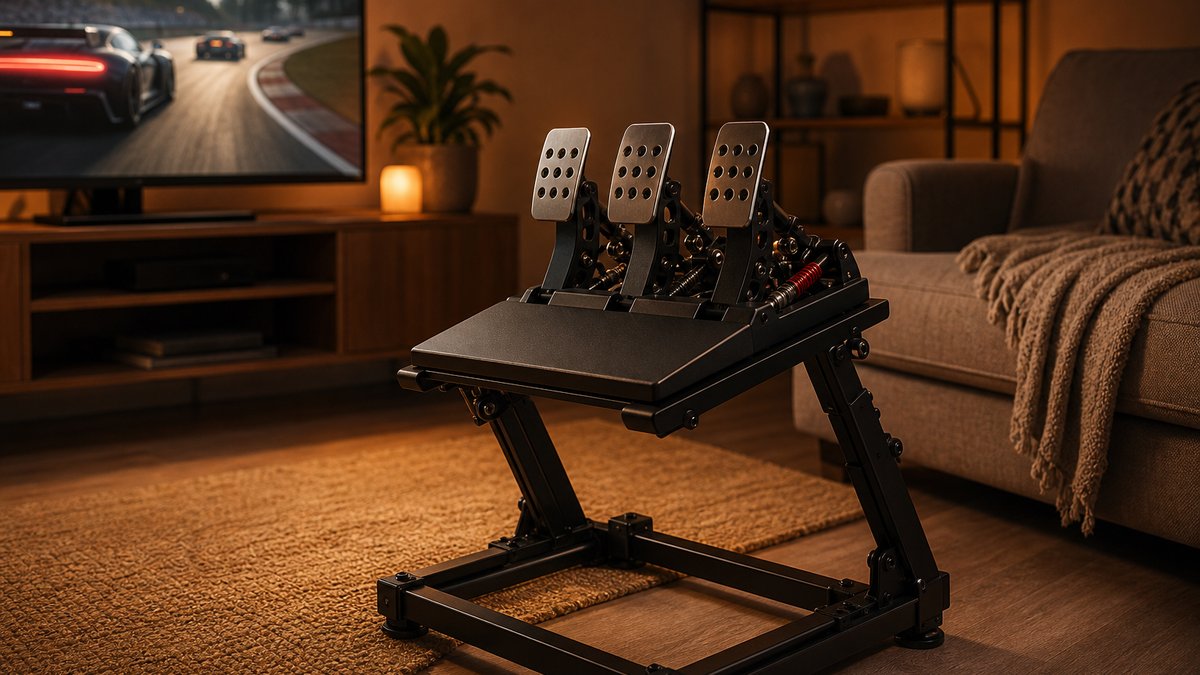
The picks at a glance
Six pedal sets define the under-$200 tier in 2026. The Moza SR-P, Thrustmaster T-LCM, and Fanatec CSL Pedals with Load Cell Kit deliver pressure-based braking near the cap. Simsonn and Logitech options start load cell braking near $140, and the Moza SR-P Lite covers the travel-based budget floor.
| Set | Typical price | Best for | Brake sensor | Connects to |
|---|---|---|---|---|
| Moza SR-P Lite | ~$60–90 | R5 bundle owners, first rigs | Hall-effect, travel-based | Moza wheelbase |
| Simsonn pedals | ~$140 | Cheapest standalone load cell | Load cell | USB (PC) |
| Logitech G RS Pedals | ~$150 | Logitech RS ecosystem | Load cell | Logitech RS hardware |
| Fanatec CSL Pedals + LC Kit | ~$200 combined | Fanatec base owners | Load cell | Fanatec wheelbase |
| Thrustmaster T-LCM | ~$200 | Console racers, plain USB | Load cell, 16-bit | USB or Thrustmaster base |
| Moza SR-P | ~$200–220 | Moza base owners, three pedals | Load cell, 100 kg | Moza wheelbase |
Prices on sim gear move constantly, especially around Moza and Fanatec sale events. Treat the numbers above as typical street prices, not guarantees.
How these picks were chosen
Every headline pick had to meet three tests. The tests: a pressure-based load cell brake, metal construction where it counts, and active support from both the manufacturer and the community. Man Talk built this list from published specifications and documented community consensus, not from paid placements.
That standard matters in this niche. Pedal roundups often recycle spec sheets, and spec sheets hide the things owners actually complain about. Community testing catches mushy spring stacks, flexing plastic, and software quirks that only appear after a month of use. Where community consensus disagrees with the marketing, this guide sides with the community. Man Talk staff bring decades of combined gaming experience, including years spent on racing simulators. No first-person testing claims are made here. When a claim needs a source, it comes from manufacturer specifications, documented owner reports, and published reviews from outlets such as Traxion.
Why pedals beat a wheel upgrade for lap time
Braking is where sim racers gain or lose the most time, and pedals control braking. A load cell brake builds repeatable force memory, which cuts lap time variation more than any wheel upgrade at this price.
A wheel upgrade changes how the car feels. A pedal upgrade changes how repeatable your inputs are, and repeatability is what the stopwatch rewards. Most lap time lives in the braking zones. Brake two meters later with confidence and the gain repeats on every lap. Miss your brake pressure by ten percent and the corner is compromised before the apex.
Travel-based pedals make that pressure a guess. Typical potentiometer pedals report 10-bit or 12-bit values, which means between 1,024 and 4,096 steps. The T-LCM's 16-bit load cell brake reports more than 65,000 steps, and it reads force rather than position. Force is what your leg remembers, the same way it does in a real car. This is why experienced racers push newcomers toward pedals before wheels. A $200 pedal set behind a modest wheel beats a $500 wheel in front of plastic pedals for pure lap time. The other half of the budget question is covered in the budget sim racing wheel guide.
How much faster will a load cell brake actually make you?
No honest single number exists, because the gain is consistency rather than raw pace. Community reports cluster around the same story: fewer lockups, more repeatable braking points, and tighter lap time spreads within a session. Some drivers find tenths almost immediately. Others need a week to rebuild muscle memory, and the first laps can feel slower. The telling pattern across owner threads is that almost nobody switches back to a travel-based brake afterward.
Load cell vs potentiometer: what actually changes
A potentiometer or angle sensor measures how far the pedal moves. A load cell measures how hard you press. Real brakes respond to pressure, so a load cell lets you train the same muscle memory real drivers rely on.
| Factor | Travel-based (potentiometer / Hall) | Load cell |
|---|---|---|
| What it reads | Pedal position | Applied force |
| Muscle memory | Position-based, shifts with seating | Pressure-based, stays repeatable |
| Typical resolution | 10-bit to 12-bit | Up to 16-bit |
| Trail braking control | Workable, less precise | Fine-grained release control |
| Price floor in 2026 | Under $50 bundled | Around $140 standalone |
One nuance worth knowing: Hall-effect sensors, used on the SR-P Lite and on T-LCM throttles, are still travel-based. They remove the scratchy wear problem of cheap potentiometers, but they measure position, not pressure. Contactless does not mean load cell. The brake pedal is the only place where the sensor type changes how you drive.
Moza SR-P: the strongest all-round set (~$200–220)
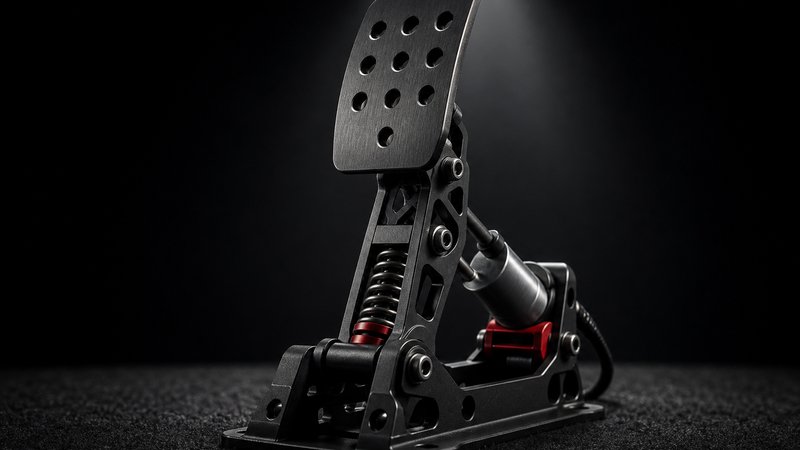
The Moza SR-P is the top choice for PC racers on a Moza wheelbase. It ships with three pedals, puts a 100 kg load cell on the brake, and lists just above $200 before sales pull it under.
The brake reads pressure through a load cell rated to 100 kg, per Moza's published specs. The throttle and clutch use contactless Hall-effect angle sensors, so there are no wear-prone contact tracks. Construction is steel where it matters, with adjustable pedal angle, height, and spacing. Moza's Pit House software sets the maximum braking force, so the pedal can run as light or as firm as your mounting allows.
The catch is connectivity. The SR-P plugs into a Moza wheelbase rather than straight into a PC. Racers on another brand's base should confirm current standalone connection options at Moza's official site before ordering. One more wrinkle: Moza now sells the newer SR-P2 alongside it at similar money. Recent reviews rate the SR-P2 as the budget load cell set to beat, so compare live prices on both before deciding. Either way, Traxion's verdict on the SR-P line holds: it is the upgrade that extends Moza's budget bundles into serious territory.
Thrustmaster T-LCM: the console pick (~$200)
The Thrustmaster T-LCM is the pick for console racers and for anyone who wants a plain USB connection on PC. It pairs a 16-bit load cell brake with magnetic sensors on every pedal, right at the $200 cap.
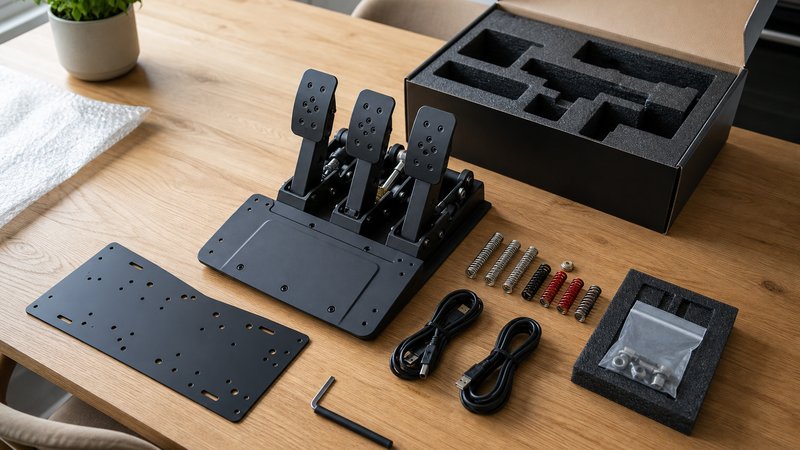
The brake's 16-bit input means more than 65,000 distinct pressure steps, which is class-leading precision at this price. Thrustmaster's H.E.A.R.T magnetic sensor design has no contacts to wear out, a genuine long-term advantage. The box includes six springs, so brake resistance can be tuned from soft to firm without buying anything else. Pedal faces and arms are metal, with adjustable spacing across the base.
Platform support is the headline. On PC the T-LCM runs over USB with no wheelbase required. On PS5, PS4, and Xbox it works when connected to a compatible Thrustmaster wheel, which no Moza or budget Fanatec setup matches as cleanly. Street prices regularly dip below list during sales, sometimes into the $170 range. The common community gripe is that the spring stack takes trial and error to dial in. Owners treat that as a weekend project, not a flaw.
Fanatec CSL Pedals with Load Cell Kit (~$200 combined)
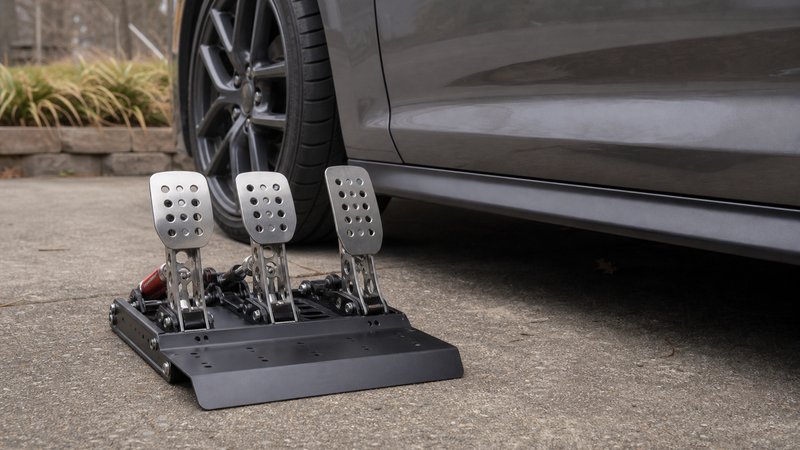
Fanatec's CSL Pedals become a load cell set in two purchases. The two-pedal base set costs around $80, and the Load Cell Kit adds around $120. Combined they land near $200 and slot straight into a Fanatec wheelbase.
The appeal is the ecosystem. Anyone running a CSL DD base keeps everything in one software stack, one tuning menu, and one brand's support pipeline. Construction is all-metal, unusual at the base set's price, and a clutch pedal can be added later. The Load Cell Kit replaces the standard travel-based brake with a pressure-based unit, and Fanatec's published materials put its braking force ceiling around 90 kg.
The honest caveats: without the kit, the base CSL Pedals brake on travel like any starter set, so budget for both pieces from the start. Connection runs through a Fanatec wheelbase, so platform support follows whatever base you own. Current bundle pricing and compatibility charts live at Fanatec's official site. Multiple 2026 roundups call this pairing the value benchmark for Fanatec owners, and the community broadly agrees.
Moza SR-P Lite: the budget floor (~$60–90)
The Moza SR-P Lite is the travel-based set bundled with Moza's R5 wheel package. Standalone pricing runs roughly $60 to $90 depending on pedal count, and it is a starting point rather than a destination.
Both pedals use contactless Hall-effect angle sensors, so the SR-P Lite avoids the scratchy potentiometer wear that ruins old Logitech and Thrustmaster starter pedals. The brake still measures travel, not pressure. Moza sells an add-on clutch for around $40, and Pit House software handles curves and dead zones.
The value-honest read: keep it if it came in your bundle, and learn on it happily. Skip it as a standalone upgrade purchase. Comparative reviews put the performance gap between the SR-P Lite and a real load cell set above the gap between budget and mid-range load cells. When braking consistency becomes your limit, the SR-P or SR-P2 is the natural next step.
Cheaper load cell sets worth watching (under $150)
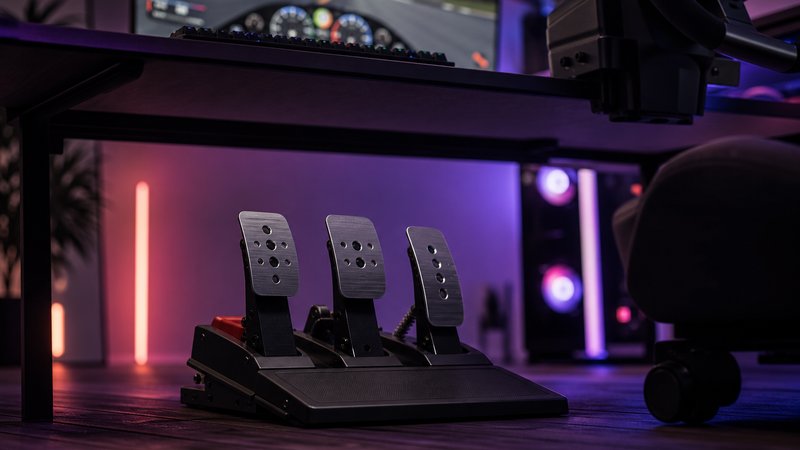
Load cell braking now starts near $140. Recent roundups list the Logitech G RS Pedals and the community favorite Simsonn set as genuine load cell options under $150. Both carry trade-offs in polish and support.
This is the newest development in the segment. Load cell hardware was a $200-plus feature for years, and 2025 brought it under $150 for the first time. Simsonn's set connects over USB and shows up constantly in community value threads, though quality control reports vary more than with the big brands. Logitech's RS Pedals bring a load cell brake into the company's newer RS ecosystem. That is a notable shift from the potentiometer pedals bundled with the G29 era.
The sensible approach: if the budget is hard-capped near $150, these deserve a look, with expectations set accordingly. If $200 is reachable, the three headline picks carry longer track records, better documentation, and stronger resale demand. Prices and revisions in this tier change quickly, so check recent owner reports before committing.
What to check before you buy any pedal set
Five checks separate a good purchase from a returned one: wheelbase compatibility, platform support, mounting plan, force adjustability, and upgrade path.
- Wheelbase compatibility. Moza and Fanatec pedals plug into their own wheelbases, not into a bare PC by default. The T-LCM and most sub-$150 sets run over plain USB. Confirm the exact connection before checkout.
- Platform support. Console racing narrows the field fast. The T-LCM covers PS5, PS4, and Xbox through a compatible Thrustmaster wheel. Ecosystem pedals inherit whatever platforms their base supports.
- Mounting plan. A load cell brake needs serious resistance, and a sliding pedal set wastes the whole upgrade. Hard-mount to a rig where possible. The sim racing cockpits under $300 guide covers frames that cost less than these pedals.
- Force adjustability. Check that maximum brake force is settable in software, and that springs or elastomers can be swapped. Comfort settings differ hugely between socks, sneakers, and sim shoes.
- Upgrade path. Clutch add-ons, damper kits, and ecosystem bases all extend a set's life. A pedal set that grows with your rig beats one that gets replaced in a year.
Do you really need a clutch pedal for sim racing?
Mostly no. Modern GT and formula cars in the big sims shift with paddles and handle the clutch automatically. A third pedal earns its place for historic content, drifting, or rally driving with an H-pattern shifter. Two-pedal sets keep costs down, and every ecosystem here sells a clutch add-on later. Buying the clutch on day one only makes sense if manual-shift cars are already the plan.
Which set should you actually buy?
Buy the Moza SR-P if you run a Moza wheelbase. Buy the Thrustmaster T-LCM for console play or a plain USB connection. Buy the CSL Pedals with Load Cell Kit if you own a Fanatec base. Fix your mounting before buying anything.
A simpler way to decide: follow your wheelbase first, then your platform, then your budget. Ecosystem lock-in sounds annoying, but it keeps software, support, and future upgrades in one place. The one universal rule is the brake sensor. Getting pressure-based braking for under $200 is the best value move in sim racing right now. Multiple 2026 buyer's guides land on that same conclusion. A racer who nails that upgrade can leave the wheel alone for years.
The sim racing gear market keeps moving, with new budget load cell sets landing every few months. The Man Talk sim racing section tracks new releases and follow-up guides as they publish, and the about page explains how recommendations get made here.
Frequently asked questions
Do sim racing pedals under $200 work on PlayStation and Xbox?
Only through the right wheelbase. The Thrustmaster T-LCM works on PS5, PS4, and Xbox when connected to a compatible Thrustmaster wheel, and on PC over USB. Moza SR-P and Fanatec CSL pedals depend on their wheelbase's platform support. Check the exact combination before ordering.
Is a load cell brake worth the extra money over potentiometer pedals?
For most racers, yes. A load cell reads pressure the way a real brake does, so braking becomes repeatable muscle memory instead of guesswork. Drivers switching from travel-based pedals routinely report more consistent lap times within a few sessions. It is widely considered the best value upgrade in sim racing.
How hard do you have to press a load cell brake pedal?
As hard as you choose. A 100 kg rating describes the sensor's ceiling, not a requirement. Software such as Moza Pit House or Thrustmaster's control panel lets you set maximum force to a comfortable level. Most racers run far below the ceiling and still reach full braking in game.
Do load cell pedals work on a desk setup without a racing rig?
They can, but mounting matters. A load cell brake pushes back hard, so a pedal set that slides ruins the benefit. Heavy baseplates, carpet spikes, or a wall brace help. A rigid cockpit is the proper fix, and decent frames now cost less than the pedals themselves.