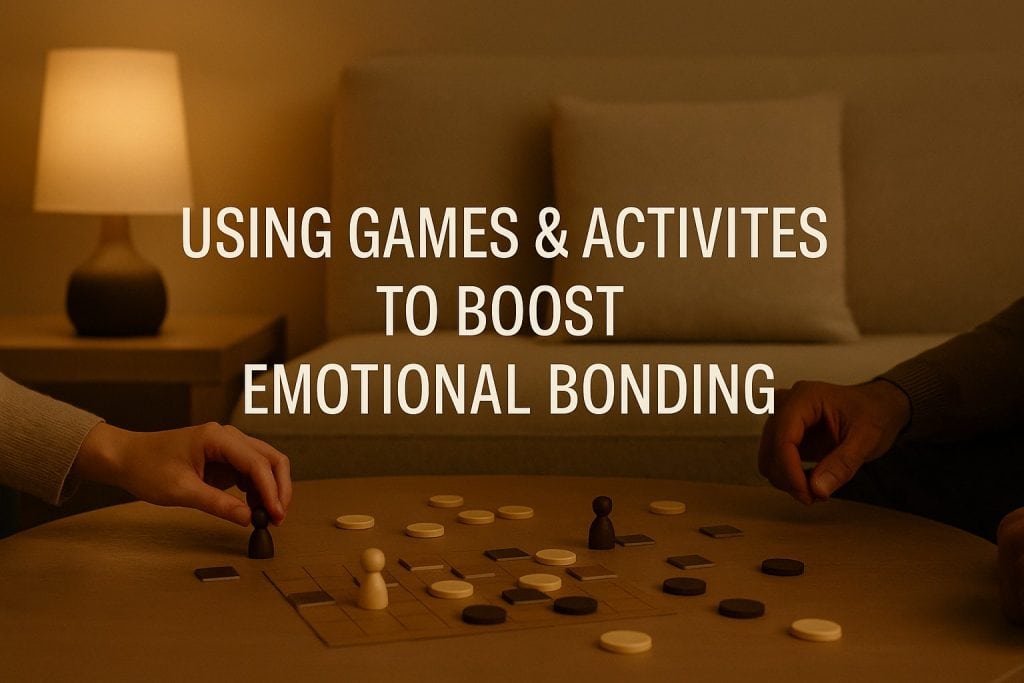
Using Games & Activities to Boost Emotional Bonding
Many couples want deeper emotional bonding but don’t always know where to begin. One of the most effective — and surprisingly fun — approaches is using structured games and activities that encourage communication, vulnerability, and shared experiences.
Games work because they remove pressure. Instead of having a “serious talk,” couples get to explore curiosity, humor, and connection in a low-stress way that naturally increases closeness.
Why Games Help Strengthen Emotional Bonding
When couples play together, they activate the parts of the brain responsible for joy, novelty, and shared engagement. This creates a sense of “us” — a psychological state associated with long-term relationship satisfaction.
Games Boost Bonding Because They:
- increase laughter and positive interaction
- create new shared memories
- encourage vulnerability in a safe way
- promote teamwork and connection
- reduce defensiveness and tension
- help partners learn more about each other
Playfulness is a core component of emotional intimacy.
Activity Type #1 — Conversation & Question Games
These games help partners open up emotionally without feeling overwhelmed.
Why They’re Effective:
- they encourage curiosity
- they deepen understanding
- they increase empathy
- they reduce emotional assumptions
Examples:
- “Highs & Lows” — share one highlight and one challenge from the day
- “Two Truths & a Compliment” — a twist on the classic game
- “Future Dreams” questions — explore hopes and goals together
- Card decks for couples — structured questions that explore emotions
These games deepen communication without forcing seriousness.
Activity Type #2 — Teamwork Games
Cooperative play helps partners strengthen their sense of partnership.
Benefits of Teamwork Activities:
- improve collaboration
- build shared problem-solving
- increase emotional reliance on each other
Examples:
- Escape room games (at-home versions)
- Co-op board games
- Puzzle-building together
- Cooking challenges
Facing challenges side-by-side builds trust.
Activity Type #3 — Creative & Artistic Activities
Creativity helps couples express new parts of themselves, which increases emotional openness.
Examples:
- Paint-and-sip at home
- Joint vision boards
- Writing short stories together
- Craft kits made for couples
Creativity increases bonding because it activates curiosity and collaboration.
Activity Type #4 — Playful Challenge Games
These activities add light competition that energizes the relationship in a healthy way.
Examples:
- Trivia games
- Scavenger hunts at home or outdoors
- Mini-sports challenges
- Timed teamwork challenges
Light competition builds excitement while staying emotionally safe.
Activity Type #5 — Mindfulness & Connection Games
These activities help partners slow down, breathe, and reconnect emotionally — perfect after long workdays or stressful weeks.
Examples:
- Guided connection apps
- Breathing synchronized exercises
- “Silent Eye Contact” game
- Gratitude reflection activities
These activities help repair emotional distance quickly.
Games Are Especially Helpful for Busy or Stressed Couples
Many couples feel disconnected not because of lack of love but because of lack of time. Games help you reconnect without requiring deep emotional labor.
They Work Well For:
- couples with tight schedules
- partners who struggle to open up verbally
- new couples learning to communicate
- long-term couples who need a refresh
Play is a form of emotional maintenance.
Internal Links
Amazon Product Suggestions (Replace With Affiliate Links)
- Couples card games — Search
- Relationship conversation decks — Search
- Cooperative board games — Search
- Creative art kits for couples — Search
- Mindfulness bonding tools — Search
Final Encouragement
Emotional bonding doesn’t have to be complicated. Games and activities turn connection into something playful, shared, and enjoyable.
Pick one activity this week — even something simple. When partners play together, they grow together.