Shared Relaxation Tools for Couples
Stress affects connection. When partners feel overwhelmed, drained, or mentally cluttered, communication becomes harder and intimacy naturally declines. One of the most effective ways to strengthen a relationship is to relax together intentionally.
Shared relaxation tools help couples regulate emotions, reduce tension, and reconnect with each other in a calm, grounding way. This guide focuses on non-explicit, emotionally supportive tools that deepen closeness without pressure.
Why Shared Relaxation Matters
Couples who relax together build a healthier emotional baseline. When your nervous systems settle at the same time, you naturally feel more connected.
Shared Relaxation Benefits:
- reduces stress and anxiety
- increases emotional attunement
- deepens trust and safety
- improves communication clarity
- creates peaceful bonding moments
- helps couples reconnect after conflict
Relaxation is not “doing nothing” — it’s rebuilding the emotional foundation of the relationship.
Tool #1 — Guided Meditation Apps (For Couples)
Meditation is easier when shared. Guided meditations designed for couples help partners breathe together, synchronize emotional rhythms, and re-center after long days.
How This Strengthens Bonding:
- calms the nervous system
- creates shared presence
- reduces emotional reactivity
- encourages mindful communication
Even 5–10 minutes can transform the emotional atmosphere of the relationship.
Tool #2 — Aromatherapy & Relaxing Scents
Scent is one of the most powerful emotional cues. When couples use relaxing aromas together, the brain associates that scent with connection, calmness, and safety.
Great Shared Scents Include:
- lavender (calming)
- eucalyptus (refreshing)
- chamomile (soothing)
- sandalwood (grounding)
Using scents during shared relaxation creates deeper emotional memory pathways.
Tool #3 — Weighted Blankets for Two
Weighted blankets activate deep-pressure stimulation, which lowers cortisol and improves emotional regulation. When shared, they become a tool for grounding and closeness.
Benefits for Couples:
- reduces anxiety
- increases feelings of safety
- promotes slow breathing
- helps couples unwind together
Tool #4 — Relaxation Games & Mindfulness Activities
Not all games are competitive. Some are designed specifically to help partners slow down, connect, and reflect together.
Examples:
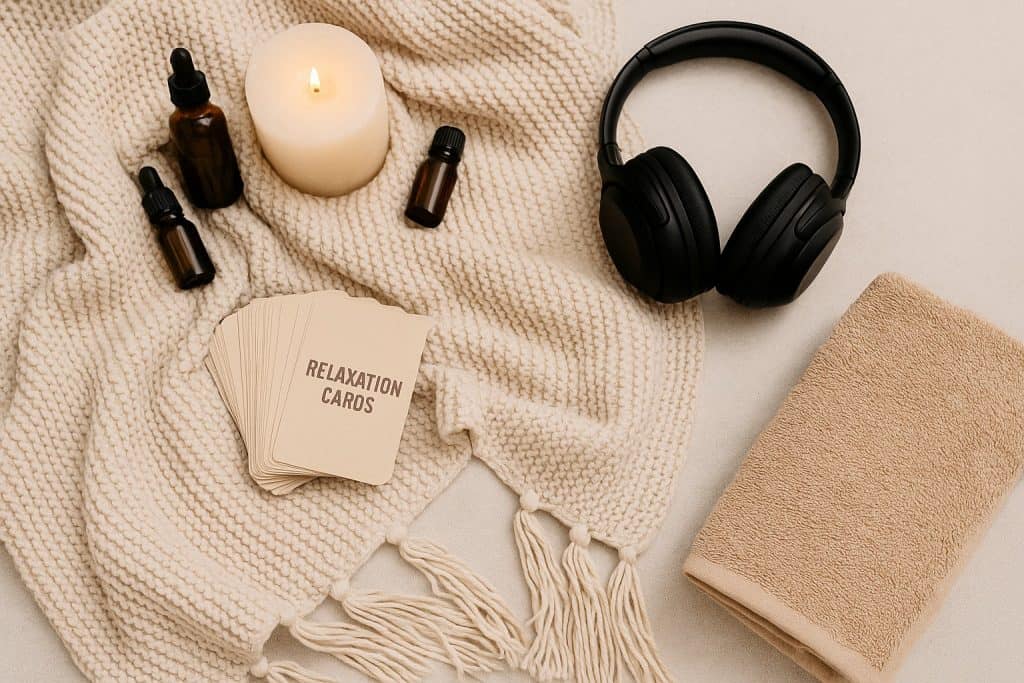
- guided card decks for connection
- mindfulness dice or prompt cubes
- “slow conversation” cards
- connection-building journaling prompts
These tools remind couples to pause and truly see each other.
Tool #5 — Soundscapes & Music Therapy
Shared sound environments help couples transition from stress to calm. Whether it's ocean waves, soft piano, or nature sounds, music regulates emotional tone.
Why This Helps:
- creates ambiance
- helps partners relax together
- reduces anxiety
- encourages quiet closeness
Music brings partners back into emotional alignment.
Tool #6 — At-Home Spa Elements
Creating a spa atmosphere at home is a simple yet powerful way to build connection. This doesn’t require anything elaborate — small touches work well.
Shared Spa Concepts:
- warm towels
- calming lighting
- aromatherapy diffusers
- soft textures and blankets
- foot soaks or warm compresses
The goal is comfort, not perfection.
Tool #7 — Relaxation Rituals for Connection
Rituals make relaxation predictable, which helps couples regulate more effectively.
Simple Ritual Ideas:
- evening “wind-down” time together
- shared tea before bed
- slow breathing before conversations
- five-minute grounding pause after conflict
Consistency creates emotional safety.
Internal Links
Amazon Product Suggestions (Replace with Affiliate Links)
- Aromatherapy diffusers — Search
- Weighted blankets — Search
- Relaxation sound machines — Search
- Guided mindfulness card decks — Search
- At-home spa tools — Search
Final Encouragement
Relaxation is one of the most overlooked forms of intimacy. When couples intentionally slow down together, they create the emotional conditions necessary for closeness, connection, and long-term relationship health.
Pick one tool, try it this week, and give yourselves permission to rest — together.