Creating a Relaxing Sensory Environment at Home
A relaxing environment is one of the simplest and most effective ways to help couples reconnect. When your space feels calming, your nervous system settles — and when both partners feel grounded, emotional intimacy becomes easier and more natural.
This non-explicit guide walks you through the sensory elements that matter most: light, scent, sound, touch, and temperature. By intentionally shaping your environment, you create a safe, peaceful atmosphere perfect for bonding, massage, or quiet connection.
Why a Sensory Environment Matters for Connection
The brain is always scanning for cues of comfort or tension. Your surroundings influence your mood more than you realize — clutter, harsh lighting, or overwhelming noise can quietly increase stress and emotional distance.
A Relaxing Sensory Environment Helps Couples:
- reduce stress and anxiety
- regulate the nervous system
- feel more emotionally safe
- communicate with more patience
- increase feelings of closeness
- transition out of “work mode” faster
Your home can become a sanctuary — or a source of stress. The difference is often sensory.
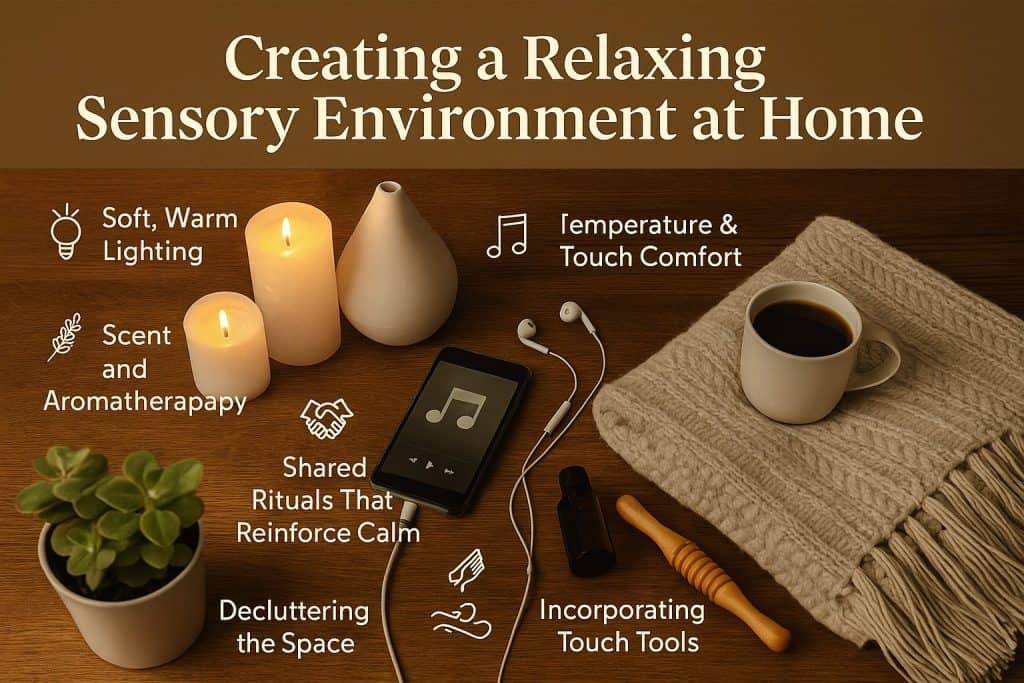
Element #1 — Soft, Warm Lighting
Lighting is the fastest way to shape emotional tone. Harsh overhead lights activate alertness; soft lighting promotes calmness.
How to Use Lighting to Relax:
- use lamps instead of bright ceiling lights
- choose warm-colored bulbs (2700K–3000K)
- add candles or LED candles for softness
- use dimmers when possible
Warm lighting sends a psychological signal: you’re safe to slow down.
Element #2 — Scent and Aromatherapy
Scent activates emotional memory stronger than any other sense. The right aroma can create comfort, relaxation, and emotional openness within seconds.
Recommended Calming Scents:
- lavender — soothing & stress-reducing
- eucalyptus — refreshing & clarifying
- vanilla — comforting & warm
- sandalwood — grounding & steadying
- citrus — bright & uplifting
Diffusers, candles, and lightly scented lotions work beautifully.
Element #3 — Sound & Music Atmosphere
Sound shapes emotional rhythm. Slow, calming sound environments help couples drop tension and reconnect.
Relaxing Sound Options:
- soft piano playlists
- ocean waves or nature sounds
- low-volume ambient music
- sound machines with calming cycles
Sound should be gentle and supportive — not distracting.
Element #4 — Temperature & Touch Comfort
Comfort is sensory. If you’re cold, tense, or uncomfortable, connection becomes difficult.
Ways to Improve Physical Comfort:
- warm blankets or throws
- heated pads or warm towels
- comfortable seating with support
- soft textures (pillows, fabrics, rugs)
A comfortable body encourages a calm mind.
Element #5 — Decluttering the Space
Visual chaos increases cognitive load. A clean, simple environment frees the nervous system from distractions and tension.
Decluttering Doesn’t Have to Be Major:
- clear one table or nightstand
- remove laundry or stacks of mail
- keep only what supports calmness
- add one soft, grounding element like a plant
Visual simplicity helps both partners feel more settled.
Element #6 — Shared Rituals That Reinforce Calm
Sensory environments are most powerful when paired with small rituals that create emotional predictability.
Ideas for Relaxation Rituals:
- a nightly “soft lighting” moment
- lighting a candle before winding down
- playing relaxing music after work
- sharing tea in a peaceful space
- a weekly at-home spa night
Rituals tell your nervous system: “This is our time to slow down together.”
Element #7 — Incorporating Touch Tools
Touch becomes even more soothing in a sensory-rich environment. Tools don’t have to be complex; simple items enhance comfort and bonding.
Examples of Non-Intimate Touch Tools:
- massage oils or lotions
- warm compresses
- soft brushes
- massage rollers
These small tools support grounding and connection without pressure.
Internal Links
Amazon Product Suggestions (Replace With Affiliate Links)
- Aromatherapy diffusers — Search
- Relaxation lighting — Search
- Sound machines — Search
- Soft throws & cozy blankets — Search
- Massage rollers — Search
Final Encouragement
You don’t need a spa or expensive equipment to create a relaxing sensory environment at home. Small sensory changes can completely transform emotional energy and help couples reconnect more easily.
Start with just one element — lighting, scent, or sound — and allow the environment to support your closeness naturally.