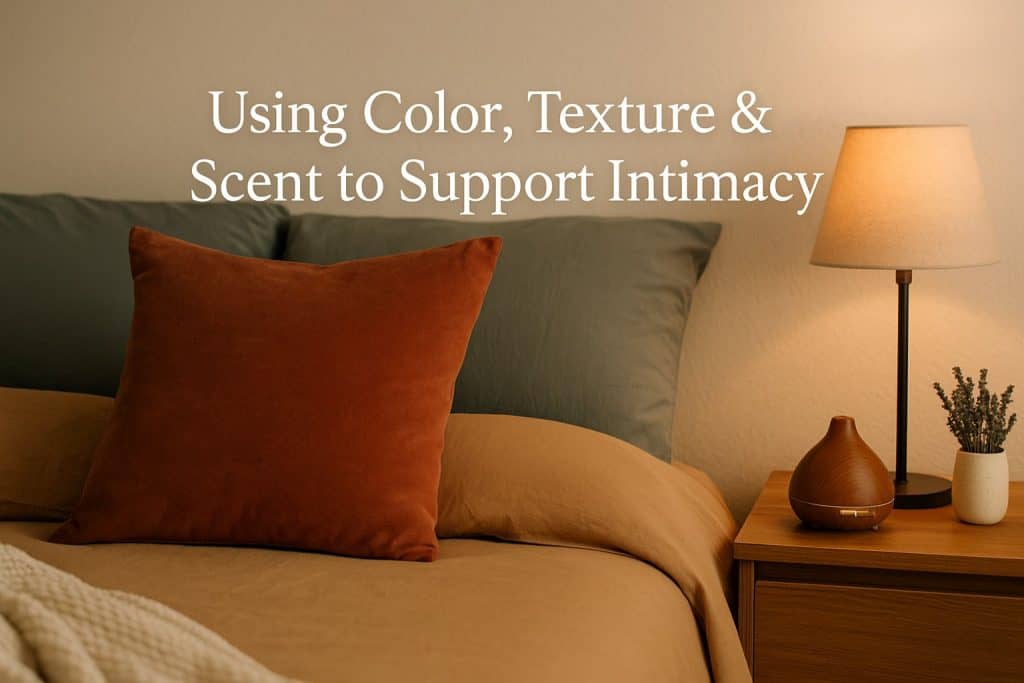
Creating a Calming Bedroom Atmosphere
A calming bedroom atmosphere does not rely on expensive décor or major renovations. It is a feeling, a sense of safety and quiet connection that gently signals to your nervous system that you can slow down. When your bedroom supports relaxation, your relationship benefits through smoother evenings, deeper conversations, and less lingering stress. The room becomes a soft landing place for both partners at the end of the day. If you want more ideas for shaping this emotional tone, Using Color, Texture and Scent to Support Intimacy offers helpful guidance.
This non explicit, psychology based guide will show you how to design a soothing environment using lighting, color, texture, scent, and sound. Each element plays a role in helping partners unwind, reconnect, and feel more emotionally grounded together. For additional ways to build shared calm, you may also appreciate Shared Relaxation Tools for Couples, which pairs well with these environment based practices.
Why a Calming Bedroom Matters for Couples
The bedroom is more than a place to sleep. It serves as the emotional reset zone of a relationship. When the space feels calm and steady, couples often shift into a more grounded and open emotional state. A soothing bedroom atmosphere supports clearer communication, gentler interactions, and a deeper sense of comfort with one another. This reflects the same principles explored in Creating a Zero Stress Bedroom Environment, where small sensory changes lead to meaningful emotional benefits.
Couples who maintain a calming bedroom atmosphere often experience:
-
better emotional communication
-
deeper relaxation in each other’s presence
-
less nighttime stress or tension
-
more frequent affection and connection
-
improved rest and mental clarity
A peaceful environment helps both partners feel grounded at the end of the day, making it easier to unwind together and settle into a more supportive emotional rhythm. For more ideas on creating shared calm, Shared Relaxation Tools for Couples provides gentle, connection focused practices that complement a soothing bedroom space.
The Psychology of a Calm Space
Environmental psychology shows that visual and sensory cues have a powerful influence on emotional responses. A cluttered or overstimulating bedroom can activate stress, making it harder for the mind to settle. In contrast, a calm, intentionally designed space signals safety. When the environment feels predictable and soothing, the nervous system can shift more easily into rest. For more insight into how sensory cues shape emotional comfort, Creating a Relaxing Sensory Environment at Home provides deeper guidance.
The Emotional Ingredients of a Calming Room
-
soft lighting
-
gentle colors
-
cozy textures
-
pleasant scents
-
predictable, soothing sounds
These elements help guide the nervous system into a restful state, allowing connection to feel natural rather than forced. When the room supports calmness, partners can settle into a shared emotional rhythm more easily. If you want to explore how specific sensory choices support intimacy, Using Color, Texture and Scent to Support Intimacy offers a helpful companion.
Step 1: Start With the Lighting
Lighting is the foundation of ambience. Harsh or overly bright lighting can increase alertness and tension, while soft lighting immediately creates a calmer emotional tone. When the room glows gently, it helps both partners settle into a slower, more grounded rhythm. For more ideas on shaping a peaceful evening environment, Bedroom Lighting and Ambience offers helpful guidance.
Use These Lighting Tips
-
warm bulbs around 2700K to encourage relaxation
-
dimmable bedside lamps for flexible mood setting
-
LED candles for a soothing, gentle glow
-
accent lighting instead of bright overhead lights
If lighting is the emotional temperature of the room, warm ambience acts as the emotional blanket that helps the nervous system soften.
Step 2: Choose Calming Colors
Colors influence mood more than many people realize. Soft, natural colors gently reduce the body’s stress response and make the space feel more comfortable and grounding. These tones support the emotional ease explored in Using Color, Texture and Scent to Support Intimacy, where color plays a key role in shaping connection.
Best Colors for a Calming Bedroom
-
soft neutrals
-
cool blues
-
muted greens
-
warm beige or cream
-
earthy tones
Overly bright colors can increase stimulation, which is the opposite of what you want in a calming bedroom. Choosing gentle tones helps your mind and body shift into rest more easily.
Step 3: Add Cozy, Soft Textures
Texture influences the emotional feel of a room just as much as the physical one. Soft, cozy materials create warmth, comfort, and a natural sense of ease. When the room feels gentle to the touch, it becomes easier for both partners to relax and settle into the space. This idea connects closely with How Different Textures Affect Comfort and Relaxation, which explains how texture shapes emotional grounding.
Try Adding
-
plush blankets
-
soft throw pillows
-
a comfortable and inviting rug
-
smooth, breathable bedding
These simple touches make the room feel more welcoming and serene. When texture supports comfort, the environment naturally encourages rest, calm, and easy connection between partners.
Step 4: Use Scent for Emotional Calm
Scent has a powerful influence on mood, memory, and emotional balance. Gentle, calming aromas can help the mind and body shift into a more relaxed state, making it easier for both partners to unwind together. When used intentionally, scent becomes a quiet emotional cue that the space is safe, calm, and ready for rest. If you want to explore how sensory details shape connection, Using Color, Texture and Scent to Support Intimacy offers deeper guidance.
Popular Calming Scents
-
lavender
-
vanilla
-
sandalwood
-
jasmine
-
eucalyptus in light amounts
Use diffusers, candles, or room sprays in soft strengths rather than intense concentrations. Subtlety helps the scent relax the nervous system instead of overwhelming it, allowing the room to feel more grounded and emotionally welcoming. For more ways to incorporate soothing sensory tools, you may also appreciate Shared Relaxation Tools for Couples.
Step 5: Reduce Visual Clutter
Clutter triggers stress because the brain reads scattered items as unfinished tasks. When the eyes have too much to process, the nervous system stays alert instead of settling. A calming bedroom thrives on visual simplicity, giving both partners a clearer emotional landscape to relax into. For more guidance on reducing visual stress, Creating a Zero Stress Bedroom Environment expands on this principle.
Declutter These First
-
nightstands
-
dressing areas
-
floors and walkways
-
visible shelves
A clean, simplified space makes emotional calm easier to access. With fewer distractions, your mind can shift into rest more naturally, allowing the room to support connection and comfort. If you want additional ways to create a gentle sensory environment, Creating a Relaxing Sensory Environment at Home pairs well with this step.
Step 6: Add Soft, Predictable Sounds
Sound design is often overlooked, yet it has a powerful effect on emotional regulation. Gentle, consistent sounds help the nervous system shift out of alertness and into calm. When the auditory environment feels steady and soothing, both partners can relax more easily and settle into a shared emotional rhythm. For more ideas on shaping a peaceful sensory space, Creating a Relaxing Sensory Environment at Home offers helpful guidance.
Try Adding
-
nature sounds
-
soft ambient music
-
white noise machines
-
low volume instrumental playlists
Predictable, gentle sound is extremely soothing to the nervous system. It creates a steady emotional backdrop that encourages presence, ease, and connection. If you want additional calming tools that pair well with sound, Shared Relaxation Tools for Couples can help enrich the overall atmosphere.
Step 7: Create a “No Work Zone” Boundary
Emotional calm cannot coexist with work stress. When laptops, to do lists, or work related conversations enter the bedroom, the mind stays alert instead of settling. Creating a clear boundary around work helps your nervous system shift into rest and signals that this space is meant for comfort, not productivity. For more support with creating emotionally grounded evening habits, Rituals That Signal We Time for Couples offers simple transition rituals that complement this boundary.
Set These Boundaries
-
no laptops or work emails in bed
-
no harsh overhead lighting
-
no clutter piles that trigger mental reminders
-
no stressful conversations late at night
These boundaries turn the bedroom into a protected sanctuary rather than a workspace. When the room is free from work signals, both partners can relax more easily, communicate with more warmth, and settle into deeper connection. For additional ideas that support emotional ease, Shared Relaxation Tools for Couples pairs well with this step.
Internal Links
Amazon Product Suggestions (Replace With Affiliate Links)
- Warm light bulbs — Search
- Essential oil diffusers — Search
- LED candles — Search
- Plush blankets — Search
- Nature-sound machines — Search
Final Encouragement
A calming bedroom atmosphere builds emotional connection in a natural and effortless way. When the environment feels peaceful, your relationship often follows. Simple changes such as a warm lamp, a clean nightstand, or a soft blanket can shift the entire mood of your evenings. These small choices work together to create a sense of grounding and comfort, similar to the effects described in Creating a Zero Stress Bedroom Environment.
You deserve a space that supports rest, connection, and emotional ease. Let your bedroom become the quiet retreat you look forward to every night, a place where you and your partner can breathe, unwind, and reconnect. For more ways to enrich the sense of calm in your shared spaces, Shared Relaxation Tools for Couples offers additional gentle practices.