Couples’ Beginner Guide to At-Home Massage
Massage is one of the most powerful ways couples can relax together, reconnect emotionally, and build deeper intimacy without anything explicit. When offered with care, intention, and patience, an at home massage becomes a shared ritual of comfort, grounding, and closeness. It creates a moment where the outside world softens and both partners can settle into warmth and presence. For more sensory based ways to relax as a couple, Shared Relaxation Tools for Couples is a helpful companion resource.
This beginner friendly, non explicit guide walks you through how to set the scene, use touch in a calming way, and build emotional connection through simple massage techniques anyone can learn. If you want more insight into how touch naturally supports emotional safety, How Touch Helps Calm the Nervous System pairs beautifully with this guide.
Why At Home Massage Strengthens Relationships
Physical touch naturally triggers the release of oxytocin, often called the bonding hormone. When partners offer each other supportive touch, the nervous system relaxes, breathing slows, and emotional openness increases. This shift creates a calmer emotional atmosphere where connection feels easier and more natural. If you want to understand this process more deeply, How Touch Helps Calm the Nervous System explains how the body responds to soothing touch.
Massage Helps Couples Because It
-
reduces stress and physical tension
-
creates a calm, shared experience
-
increases emotional safety
-
builds trust through consistent, caring touch
-
improves communication and connection
Even a simple five minute shoulder massage can reset the emotional energy between partners. When the body feels supported, the relationship often follows with more softness, presence, and ease. For additional tools that help couples build shared calm, you may also appreciate Accessories That Support Calm, Comfort and Connection.
Step 1: Create a Relaxing Atmosphere
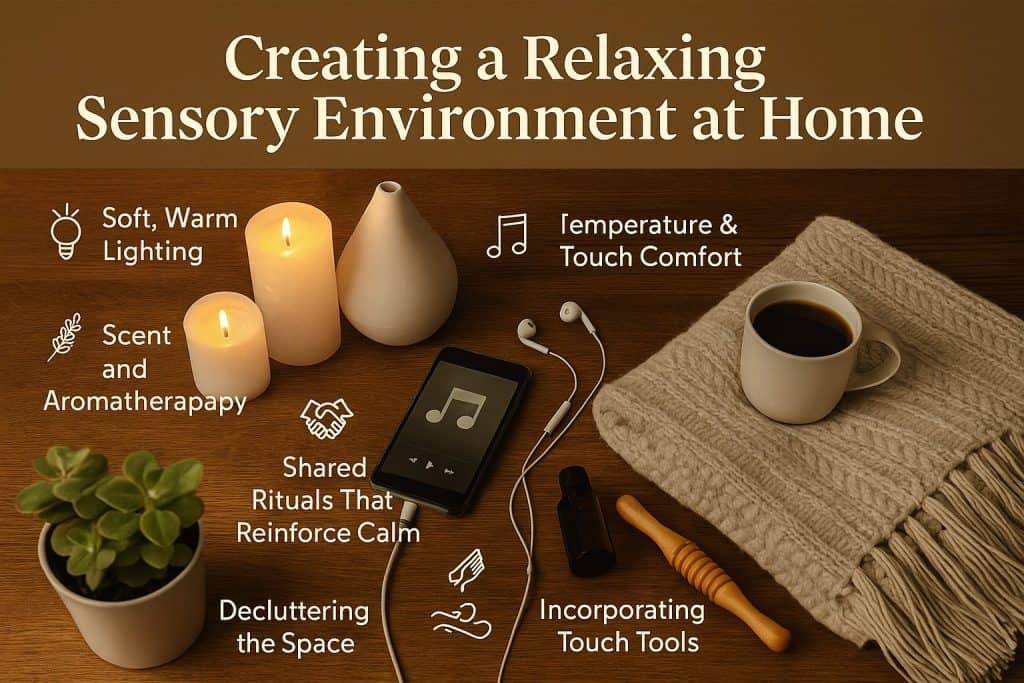
Massage is most effective when both partners feel physically and emotionally comfortable. You do not need anything elaborate. A few small, intentional adjustments can transform the experience and help your partner settle into a calmer state. The goal is to create an environment that feels warm, safe, and inviting. For more guidance on shaping a peaceful space, Creating a Calming Bedroom Atmosphere offers supportive ideas.
What You’ll Need
-
soft lighting from lamps, candles, or warm LED lights
-
a comfortable place to sit or lie down
-
relaxing music or nature sounds
-
a warm blanket or towel
-
optional: massage oil or lotion for smoother, gentler touch
A calm environment helps both partners relax into the moment. When the space feels supportive, your partner’s nervous system can soften more easily, allowing the massage to become a shared moment of connection. If you want additional sensory tools to enhance the atmosphere, Using Color, Texture and Scent to Support Intimacy pairs well with this step.
Step 2: Set Emotional Expectations First
Before you begin, take a moment to check in with each other. Massage is not only physical. It invites vulnerability, comfort, and emotional openness. A brief conversation helps prevent misunderstandings and ensures that both partners feel safe, heard, and supported. For more guidance on communicating comfort needs, Talking to Your Partner About Comfort Preferences offers helpful approaches.
Helpful Questions to Ask
-
“How are you feeling today”
-
“Would a gentle or firmer touch feel better”
-
“Is there an area you would like me to focus on”
-
“Is there anything I should avoid”
This simple check in builds trust and allows you to tailor the massage to your partner’s needs. When both partners feel emotionally aligned, the massage becomes a calming shared moment rather than a task. For deeper insight into understanding comfort through touch, Understanding Your Partner’s Touch Preferences pairs well with this step.
Step 3: Use Slow, Intentional Touch
Beginners often assume massage requires complex techniques, but it does not. The most emotionally supportive massage is built on touch that is slow, steady, and predictable. This type of movement helps the nervous system relax and allows your partner to settle into the experience. If you want more guidance on using pace and intention during touch, How Touch Helps Calm the Nervous System explains the science behind why slow touch is so effective.
Beginner Friendly Techniques
-
Gliding touch: Move your hands slowly across larger areas to warm the muscles and encourage relaxation.
-
Gentle pressure: Use your palms instead of your fingertips to avoid sharp tension.
-
Circular motions: Apply slow circular movements around the shoulders or back to soften tight areas.
-
Static touch: Hold your hands still for a few seconds to create grounding and reassurance.
Slow, intentional touch signals safety to the body and helps both partners relax more deeply. For more ideas on using touch in calming, supportive ways, visit Massage and Seduction Tools.
Step 4: Stay Attuned to Your Partner
Emotional attunement is what turns a simple massage into a meaningful shared experience. It is the practice of staying aware of your partner’s reactions and adjusting your touch in a way that helps them feel supported and understood. When you stay tuned into their cues, the massage becomes less about technique and more about emotional connection. If you want to explore this concept more deeply, the Touch and Nervous System Guide explains how attunement shapes emotional safety.
Ways to Stay Attuned
-
notice changes in breathing or shifts in rhythm
-
pay attention to muscles softening or holding tension
-
use gentle check-ins like “Is this okay?”
-
adjust pressure or pace immediately based on their response
Your partner should feel cared for and relaxed, not judged or analyzed. Touch that adapts to their comfort builds trust and makes the experience soothing for both of you. For more grounding techniques, explore the Massage and Seduction Tools category for supportive resources.
Step 5: Create a Shared Rhythm
One of the most calming parts of partner massage is finding a rhythm together. When your breathing, pace, and movements naturally sync, the nervous system settles and emotional safety grows. Shared rhythm turns touch into connection, helping both partners feel more present and supported.
Things to Try
-
match your breathing to your partner’s pace
-
use slow, steady massage motions that feel rhythmic and predictable
-
welcome quiet moments instead of filling the silence
Shared rhythm helps both partners drop into a grounded, relaxed state. If you enjoy practices that support calm connection, the Calming Bedroom Atmosphere guide offers additional ways to create peaceful, shared energy in your space.
Step 6: End With a Grounding Moment
The closing moments of a massage matter just as much as the beginning. A gentle, quiet ending helps your partner transition out of the experience feeling calm, supported, and emotionally connected. This grounding moment reinforces the sense of safety you created through touch.
Grounding Options
-
a gentle hug
-
holding hands
-
slow breathing together
-
offering water or a warm blanket
-
sharing what felt emotionally relaxing
These little moments help the body settle and deepen the emotional effect of the massage. For couples who enjoy soothing evening routines, you may also like the Rituals That Signal “We Time” guide, which pairs beautifully with post-massage grounding.
Internal Links
Amazon Product Suggestions (Replace With Your Affiliate Links)
- Massage oils — Search
- Relaxation music playlists — Search
- Aromatherapy diffusers — Search
- Massage tools (non-intimate) — Search
- Weighted blankets — Search
Final Encouragement
At-home massage isn’t about perfect technique — it’s about emotional presence. When partners slow down, tune in to each other, and offer supportive touch, the relationship naturally becomes softer, safer, and more connected.
Start with small steps. Stay mindful of each other’s comfort. Over time, this simple ritual can become one of the most grounding and meaningful parts of your shared routine.